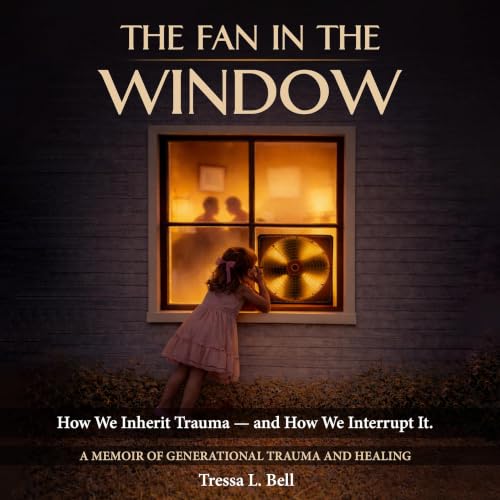
The Fan in the Window: Interrupting What We Inherit cover art

The Fan in the Window: Interrupting What We Inherit

The Fan in the Window: Interrupting What We Inherit

By: Tressa L. Bell MBA BSN RN
Listen for free

This podcast is about trauma, nervous systems, and the patterns we inherit—often without realizing it. Through personal stories, clinical insight, and honest reflection, Tressa explores how family systems, caregiving roles, and early experiences shape the way we think, feel, and respond to the world. You’ll hear conversations about generational trauma, anxiety, emotional regulation, motherhood, and what it actually looks like to heal—not perfectly, but intentionally. This is not about blame. It’s about awareness. And what becomes possible when we begin to interrupt what we’ve carried.Tressa L. Bell, MBA, BSN, RN Hygiene & Healthy Living Psychology Psychology & Mental Health
Episodes
  • Where We Go From Here?
    Jul 14 2026

    Start here: thefaninthewindow.com/start

    Most of us didn’t learn how to be in a relationship. We learned how to survive inside one.

    Season 2 opens with a solo episode—and it goes somewhere personal.

    Tressa shares what conflict used to look like in her own relationships: the fawning, the silence, the collected resentment, the flooding, the cruelty that came out without warning, and the leaving. And then the moment that broke her—seeing fear in her children’s faces and recognizing it. Because she had worn that face herself.


    This episode is about what happens between understanding your patterns and actually changing them. If you’ve done the work—the therapy, the reading, the 2 a.m. conversations with yourself—and you’re still ending up in the same places, this episode is for you.

    It’s not a character flaw. It’s a nervous system doing exactly what it learned. And nervous systems can learn something different.


    IN THIS EPISODE

    — The fawn-to-flood cycle: what it is, why it feels like relief, and why it always catches up with you

    — What flooding actually is neurologically—and why the cruelty, the leaving, and the restarting are all part of the same pattern

    — Why Tressa—a forensic nurse who testified about trauma in courtrooms—didn’t recognize it happening in her own relationships

    — The difference between understanding a pattern (stage one) and what happens in the body when someone you love triggers it (stage two)

    — How the Interruption Model™ works—and why Regulate has to come before choice, not after

    — A grounding practice to close


    CONTENT NOTE

    This episode discusses inherited trauma, nervous system responses, fawning, emotional flooding, and Tressa’s personal experience of yelling at her children and witnessing fear in their faces. Please listen at your own pace.

    In the U.S., call or text 988—free, confidential, 24/7. Outside the U.S.: findahelpline.com. You do not have to navigate this alone.


    COMING UP NEXT

    Lavinia Brown and Andrew Lynn—trauma-informed coaches, partners, and co-hosts of Becoming Untriggered (top 5% globally)—join Tressa for Episode 2. Subscribe so you don’t miss it.


    GET THE BOOK

    The Fan in the Window: How We Inherit Trauma—And How We Interrupt It

    amazon.com/author/tressalbell

    Coming Soon: You Can Interrupt It: A Practical Guide for the Parent Who Inherited Trauma and Swore They'd Do It Differently

    If the memoir gave you the story, this book gives you the roadmap. Built around the Interruption Model™—the practical guide to actually doing the work, one pattern at a time. Stay connected at thefaninthewindow.com for updates.


    FOLLOW TRESSA

    thefaninthewindow.com

    Instagram, Facebook, TikTok, YouTube: @tressalbell

    Substack: tressalbell.substack.com

    LinkedIn: linkedin.com/in/tressa-l-bell-31830440a

    If this episode resonated, please leave a review on Apple Podcasts—it takes less than two minutes and helps new listeners find this work.

    This didn’t start with you…but you can interrupt it.

    Show More Show Less
    20 mins
  • What Healing Actually Looks Like: Interrupting What We Inherit
    Jun 2 2026

    This is the season finale. And I want to be honest with you from the start.

    I do not have a tidy ending. I do not have a before-and-after story with a clean resolution and a lesson neatly wrapped.

    What I have is a direction. A long way traveled. And the deep conviction that there is no finish line—and that is not a failure. That is the truth.

    Twelve episodes. Twelve conversations about the roles we take on, the grief we carry, the apologies we give and receive, the bodies that remember what our minds try to forget, thesurvival mode we parent from, and the control we grip when we are afraid.

    This episode is about what all of it adds up to.

    In this episode I cover:

    What healing is not—not arrival, not linear, not perfection—and why that is the most important reframe of the season

    What healing actually looks like—the smaller gap, the growing patience, the faster repair, the wisdom earnedthrough traveling not arriving

    The slow accumulation—what my healing actually looked like, from therapy to Eckhart Tolle to a surgery that forced me to finally be still

    What to do when you fall back—four practical steps for the days when the old pattern gets there before you do

    The AWAKE model—the framework that holds everything this season has been about: Awareness, Work It, Accountability, Keep Going, Embody It

    What I wish I had known—the one thing I would give my younger self if I could

    The generational vision—what I am building, three generations forward, one ordinary Tuesday at a time

    A letter to the listener—to the person who showed up for all twelve episodes and did not turn away from the hard things this season asked

    This episode closes with a grounding practice and an invitation—I want to hear from you. What landed this season? What shifted? What are you going to do differently?

    There is no finish line. There is only the direction. And you are moving in it.

    🪟 This didn't start with you…but you can interrupt it.

    📖 The Fan in the Window: How We Inherit Trauma — And How We Interrupt It Available now on Amazon →amazon.com/author/tressalbell

    CONTENT NOTE This post discusses trauma, family systems, and emotional healing. If anything here brings up strong feelings or memories, please take care of yourself and reach out for support. In the U.S., you can call or text 988 to reach the Suicide and Crisis Lifeline — free, confidential, 24/7. If you are outside the U.S., international crisis resources are available at findahelpline.com. You do not have to navigate this alone.

    ABOUT THE SHOW The Fan in the Window: Interrupting What We Inherit is hosted by Tressa L. Bell, MBA, BSN, RN — author, podcaster, registered nurse, and former forensic nurse. This podcast is about trauma, nervous systems, generational patterns, and the complicated, imperfect work of healing. Each episode blends personal story with research-backed frameworks to help you recognize and interrupt what youinherited — so the next generation doesn't have to carry it too.

    GET THE BOOK 📖The Fan in the Window: How We Inherit Trauma — And How We Interrupt ItAvailable now on Amazon → amazon.com/author/tressalbell A companion self-help book is also in the works. Stay connected for updates.

    FOLLOW TRESSA 🌐Website: thefaninthewindow.com 📸 Instagram: @tressalbell👤Facebook: tressalbell 🎵 TikTok: @tressalbell ▶️YouTube: tressalbell 🐦 X / Twitter:@tressalbell39905 📩 Substack:tressalbell.substack.com 💼 LinkedIn:linkedin.com/in/tressa-l-bell-31830440a

    LISTEN & SUBSCRIBE 🎙️Apple Podcasts 🎙️ Spotify 🎙️ iHeart Radio 🎙️YouTube 🎙️ Substack New episodes every Tuesday. Ifthis episode resonated, please leave a review on Apple Podcasts — it takes less than two minutes and helps new listeners find the show.

    DISCLAIMER This post is not therapy, medical advice, or psychological treatment. Tressa L. Bell is not your therapist. Content is for educational and informational purposes only. Please seek professional support if you are experiencing a mental health crisis.

    Show More Show Less
    33 mins
  • The Illusion of Control
    May 26 2026

    There is someone in your life you love deeply who is struggling. And you know things that could help. You can see the path forward. Every instinct you have says — do something. Fix it. You know how. And you have to let them find it themselves.

    That tension — between knowing and releasing, between loving and controlling — is what this episode is about. Not because control makes you a bad person. But because the need for control has a history. And understanding that history is the first step toward loosening the grip.

    In this episode I cover:

    Where the need for control actually comes from — and why for most of us it has nothing to do with power and everything to do with safety

    How control shows up in unexpected places — the home, the food, the routines, the children's struggles — and what all of those have in common

    My mother's kitchen — the rigid routines I hated growing up, what I now understand about why they existed, and how I took on my own version of control in different domains

    What over-fixing actually teaches children — and why productive struggle is not the enemy of healthy development, it is the mechanism of it

    Learned helplessness — what researcher Martin Seligman found happens when children are repeatedly rescued from challenge, and what that costs them as adults

    The honest reckoning — what I did for my children, what I now see as the cost, and what stepping back looks like even now

    Three generations of control slowly loosening — and what it means to trust the next generation to find their own way

    The difference between control and safety — and why one is an illusion and the other is the actual work of healingThis episode closes with a box breathing practice — because box breathing is itself an act of choosing what you can actually control. Your breath. The count. The pause. Nothing else. That is the whole metaphor of the episode lived in the body.

    CONTENT NOTE This post discusses trauma, family systems, and emotional healing. If anything here brings up strong feelings or memories, please take care of yourself and reach out for support. In the U.S., you can call or text 988 toreach the Suicide and Crisis Lifeline — free, confidential, 24/7. If you are outside the U.S., international crisis resources are available at findahelpline.com. You do not have to navigate this alone.

    ABOUT THE SHOW The Fan in the Window: Interrupting What We Inherit is hosted by Tressa L. Bell, MBA, BSN, RN — author, podcaster, registered nurse, and former forensic nurse. This podcast is about trauma, nervous systems, generationalpatterns, and the complicated, imperfect work of healing. Each episode blends personal story with research-backed frameworks to help you recognize and interrupt what you inherited — so the next generation doesn't have to carry ittoo. This didn't start with you…but you can interrupt it.

    GET THE BOOK 📖 The Fan in the Window: How We Inherit Trauma — And How We Interrupt It. Available now on Amazon → amazon.com/author/tressalbell. A companion self-help book is also in the works. Stay connected for updates.

    FOLLOW TRESSA 🌐 Website: thefaninthewindow.com 📸 Instagram: @tressalbell 👤 Facebook: tressalbell 🎵 TikTok: @tressalbell ▶️ YouTube: tressalbell 🐦 X / Twitter:@tressalbell39905 📩 Substack: tressalbell.substack.com 💼 LinkedIn: linkedin.com/in/tressa-l-bell-31830440a

    LISTEN & SUBSCRIBE 🎙️ Apple Podcasts 🎙️ Spotify 🎙️ iHeart Radio 🎙️ YouTube 🎙️ Substack New episodes every Tuesday. If this episode resonated, please leave a review on ApplePodcasts — it takes less than two minutes and helps new listeners find the show.

    DISCLAIMER This post is not therapy, medical advice, or psychological treatment. Tressa L. Bell is not your therapist. Content is for educational and informational purposes only. Please seek professional support if you are experiencing amental health crisis.


    This didn't start with you…but you can interrupt it. 🪟

    Show More Show Less
    23 mins
adbl_web_anon_alc_button_suppression_t1
No reviews yet