Directionally Correct, A People Analytics Podcast cover art

Directionally Correct, A People Analytics Podcast

Directionally Correct, A People Analytics Podcast

By: WRKdefined Podcast Network
Listen for free

About this listen

Directionally Correct is the #1 people analytics podcast in the world. Hosted by Cole Napper, the podcast dives into people analytics, workforce planning, behavioral science, and talent intelligence, helping leaders navigate the future of AI in the workplace with insight and a dash of fun. To find out more, check out colenapper.comAll rights reserved by WRKdefined Economics Management Management & Leadership Science
Episodes
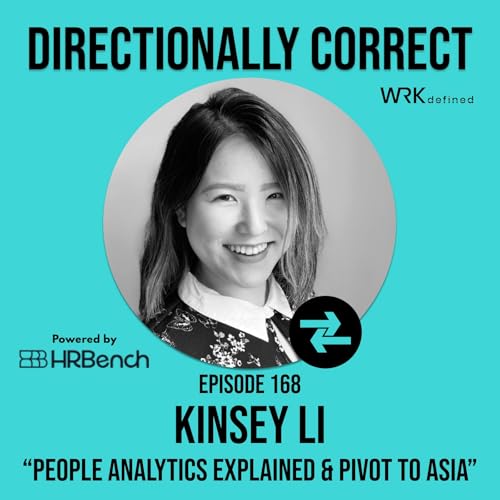
  • People Analytics Explained, Consulting Skills & Pivot to Asia - Kinsey Li - #168
    Apr 13 2026
    Thanks to HRBench for powering this episode. To find out more about the company building the future of people intelligence, reach out to book a demo at hrbench.com/directionallycorrect Check out this episode of the #1 people analytics podcast special guest, Kinsey Li, Author of "People Analytics Explained" and Advisor at PwC! In this wide-ranging and deeply thoughtful conversation, host Cole Napper sits down with Kinsey to explore what it truly takes to succeed in people analytics beyond the technical skills that often dominate the narrative. Kinsey shares the inspiration behind her book, which emerged from her own early frustrations breaking into the field. Despite completing courses and gaining certifications, she found a major gap between technical training and the real-world capabilities required to be effective. Her core insight reframes the discipline: people analytics is not primarily about data, but about relationships. In her experience, success in the field is closer to 80% stakeholder management and 20% technical execution, a perspective that challenges how many professionals approach their development. The conversation dives into the consulting mindset that has shaped Kinsey’s career, highlighting two essential skills: scoping and listening. She explains that scoping is fundamentally about defining boundaries—understanding what problem you are solving, what success looks like, and just as importantly, what you will not address. In a field where organizational challenges are deeply interconnected, the ability to prioritize and maintain focus is critical. This requires not only analytical thinking but also confidence and judgment to push back when necessary. Kinsey also offers a fascinating look at how cultural context shapes people analytics work. Drawing on her experience across Australia, the UK, and now Jakarta, she contrasts Western and Eastern workplace dynamics. In more hierarchical environments, decisions can be executed بسرعة and scaled quickly, but often with less consultation. At the same time, she notes that some of the most advanced people analytics practices exist in small, less visible pockets across Asia, where innovation happens quietly without widespread sharing. The discussion expands into themes of career growth and learning, reinforcing the idea that breadth of experience often outweighs early specialization. Kinsey connects this to probabilistic thinking, emphasizing that careers are less like chess and more like poker, where exposure to diverse experiences increases the likelihood of long-term success. This aligns with Cole’s own reflections on building expertise through multidisciplinary exposure rather than narrow focus. They also explore evolving attitudes toward AI and data privacy, particularly among younger generations. Kinsey observes that digital natives are more willing to delegate thinking to AI and are often more comfortable sharing personal data, a shift that has significant implications for the future of people analytics. At the same time, both highlight the importance of maintaining ethical guardrails as capabilities expand. Throughout the episode, Kinsey brings a candid and personal perspective, discussing how her evolving mindset, including embracing a “default trust” approach and navigating neurodiversity, has shaped how she works and interacts with others. Her journey underscores that effectiveness in people analytics is as much about self-awareness and adaptability as it is about technical skill. This episode is a compelling reminder that the future of people analytics will be defined not just by better data, but by better thinking, stronger relationships, and a deeper understanding of how work actually gets done across different contexts and cultures. If you like this episode, you’d also love exploring prior episodes—visit colenapper.com for the full archive and show links.
    Show More Show Less
    1 hr and 4 mins
  • What RedThread Research Says About AI & Everything Else - Stacia Garr & Dani Johnson - #167
    Apr 6 2026
    Thanks to HRBench for powering this episode. To find out more about the company building the future of people intelligence, reach out to book a demo at hrbench.com/directionallycorrect Check out this episode of the #1 people analytics podcast with special guests, Stacia Garr & Dani Johnson, both are Co-Founders and Principal Analysts at RedThread Research! In this wide-ranging and intellectually rich conversation, Cole Napper sits down with two of the most influential thinkers in the people analytics and HR research space to explore how AI, data, and evolving workforce dynamics are reshaping how organizations operate and make decisions. The discussion dives into RedThread’s latest research, including the evolution of mega trends shaping the future of work. Stacia and Dani reflect on themes like geopolitical disruption, the continued shift toward growth over people, and the accelerating integration of AI into enterprise workflows. Rather than viewing AI as a standalone concept, they emphasize it as an enabler becoming embedded into how organizations function—so much so that it may soon become “the air we breathe.” A major focus is the rise of multi-source analysis platforms (MSAPs), which aggregate and harmonize data across HR systems to drive better decisions. The trio explores how organizations are moving beyond siloed data toward integrated ecosystems combining employee experience, workforce planning, skills data, and operational insights. This shift represents a broader transformation in how companies understand work, breaking it down into tasks, outcomes, and dynamic systems involving both humans and AI. Dani brings a strong perspective on skills, tasks, and talent mobility, arguing that tasks may serve as the bridge between skills and work in an AI-driven world. However, both she and Stacia challenge the idea that mapping tasks alone is enough, suggesting organizations may need to rethink work from the outcome level entirely. This raises questions about whether current workforce design approaches are too rooted in legacy systems already being disrupted by AI. The episode also tackles a central question: will AI replace jobs or augment them? Stacia and Dani are clear—AI will replace some jobs, and already is. The challenge lies in how organizations respond, particularly in redeploying talent, maintaining learning pathways, and ensuring employees build the judgment needed to work effectively alongside AI. Another thread explores the “hollowed-out expert,” where individuals appear knowledgeable due to AI but lack true expertise. This raises concerns about authenticity and performance assessment, especially as research shows AI effectiveness depends heavily on user knowledge and cognitive ability. Throughout, the conversation challenges rigid HR operating models and one-size-fits-all transformation frameworks, emphasizing that success depends on asking better questions, understanding context, and adapting continuously. The episode closes with reflections on career success, the importance of social capital, and a core truth: despite rapid technological change, organizations exist because people prefer to work together. If you like this episode, you’d also love exploring prior episodes—visit colenapper.com for the full archive and show links.
    Show More Show Less
    1 hr and 12 mins
  • Scott RETURNS for a Co-Host Reunion - Scott Hines - #166
    Mar 30 2026
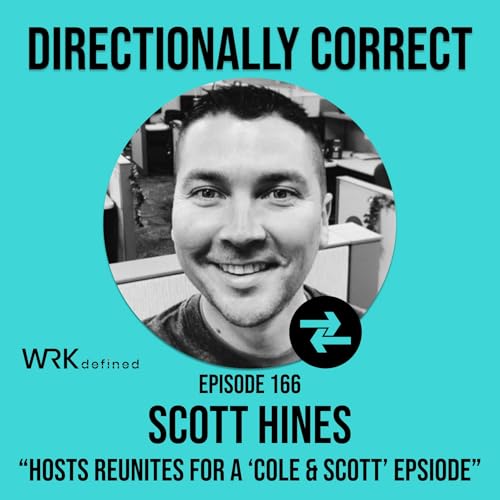
    Check out this episode of the #1 people analytics podcast with special guest, Scott Hines, Previous Co-Host of Directionally Correct! In this long-awaited reunion episode, Cole and Scott reconnect after Scott's time away from the mic, diving into a candid, wide-ranging conversation that blends humor, reflection, and sharp insight on the evolving world of work, technology, and people analytics. The discussion opens with Scott’s decision to step away from the podcast, driven in part by personal reflection following the loss of his mother and a reassessment of how he spends his time. What follows is an honest look at the hidden effort behind content creation, the opportunity cost of side projects, and the reality that even passion projects can become demanding commitments. As the conversation unfolds, the two explore how advances in AI are reshaping not just workflows, but the very nature of knowledge work itself. From fully automated academic research to AI-powered coding and reporting tools, they reflect on the accelerating pace of change and the tradeoffs that come with it, including the subtle erosion of foundational skills. At the same time, they wrestle with the paradox of wanting to stay current in a rapidly evolving tech landscape while avoiding the noise, hype, and constant distractions that come with it. This tension shows up in their discussion of digital minimalism, notification fatigue, and the idea of building a “command center” for life and work. The episode also revisits core people analytics topics, including the relationship between cognitive ability and personality, the nuances of assessment design, and the ongoing debate around prediction, fairness, and subgroup differences. Scott brings his signature analytical lens, while Cole connects these ideas back to real-world applications and the future of workforce strategy. They also touch on broader societal themes, from generational shifts in workplace behavior to the potential long-term impacts of pandemic-era disruptions on social and cognitive development. True to form, the episode mixes depth with levity. The duo riff on everything from the “Gen Z stare” to the absurdity of hyper-competitive pickleball, while also tackling more serious ideas like workplace surveillance, the changing nature of organizations in an AI-driven world, and whether academia should still be viewed as a calling or simply another job under pressure. Throughout, there’s a consistent thread: questioning assumptions, challenging norms, and trying to make sense of a world where the boundaries between human and machine capabilities are increasingly blurred. The episode closes on a high note with updates on Scott’s new role at HRBench and Cole’s continued growth of the podcast and broader ecosystem, signaling that while things evolve, the core mission of exploring people analytics and the future of work remains as strong as ever. If you like this episode, you’d also love exploring prior episodes—visit colenapper.com for the full archive and show links.
    Show More Show Less
    1 hr and 10 mins
No reviews yet