• 250 Years of Black Military Service and American Democracy
    May 29 2026

    Blacks Fought for A Nation That Did Not Always Fight for Them

    Order My Book: www.weusoursluckybooks.com

    Contact; radiotalklr@gmail.com

    Lesson Plan: 250 Years of Black Military Service

    Objective 1: Students will explain how Black Americans have served in every U.S. war from the Revolution to today. Example: A student identifies the 54th Massachusetts, the Harlem Hellfighters, and the 6888th Battalion and states how each advanced American democracy.

    Objective 2: Students will evaluate how racism shaped Black veterans’ experiences during and after service. Example: A student explains how Vietnam veterans returned to racial covenants, GI Bill discrimination, and unequal access to housing and education.

    Learning Outcomes

    Outcome 1: Students will produce a short written or verbal explanation of how Black service members showed patriotism despite barriers. Example: A student describes how the 54th fought for a nation that denied them equal pay.

    Outcome 2: Students will connect past discrimination to modern debates about equity and national memory. Example: A student explains how GI Bill exclusion contributed to the racial wealth gap still visible today.

    Student Challenge (Instructor Must Complete)

    Students challenge the instructor to identify one overlooked Black military figure or unit not covered in class and explain their contribution in under 60 seconds. If the instructor cannot answer, students choose the next figure or topic for class exploration.

    5E Learning Model

    Engage: Students examine images of Black soldiers from the Revolution, Civil War, WWI, WWII, Vietnam, and modern conflicts. Prompt: “What patterns do you see across time?”

    Explore: Students rotate through stations on the 54th Massachusetts, Harlem Hellfighters, Tuskegee Airmen, the 6888th, and Vietnam veterans facing discrimination.

    Explain: Students share findings. Instructor clarifies themes: service in every war, racism in the ranks, denied benefits, and the contradiction between service and citizenship.

    Elaborate: Students respond to: “How does recognizing 250 years of Black service change our understanding of American democracy?” They must use two historical examples.

    Evaluate (Formative Assessment): Exit Ticket:

    1. Name one Black military unit or figure and explain their contribution.
    2. Describe one form of discrimination Black veterans faced and its impact.
    Show More Show Less
    28 mins
  • LIES MY TEACHERS TOLD ME-About Black Americans
    May 6 2026

    DO NOT ALLOW COLLEGE INSTRUCTORS TO DO THE SAME

    See My Lesson Plan Below

    Comments call: 773-809-8594

    Black Americans: Nothing But the Truth All parents, teachers, and fellow Americans must listen to this episode. Share it with someone—then ask them to share it with someone else. Keep it moving. Keep the truth alive.

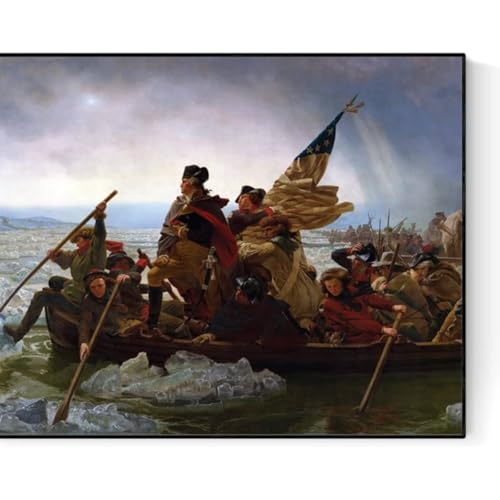
    "We were never told the full story about Black Americans and the American Revolution. Pull up images of the Battle of Bunker Hill and Washington’s crossing of the Delaware. Look closely. Find the Black patriots. Learn the truth." Mr. Positive.

    🧭Lesson Plan to Be Used with This Podcast: Reclaiming Black Patriots of the American Revolution

    Presented by the Positive People USA Podcast

    🎯 Learning Objectives (with Examples)

    Students will:

    • Identify and explain the contributions of Black patriots in the Revolutionary War, such as:
      • Wentworth Cheswell, the first Black elected official in U.S. history, who rode north in 1774 to warn of British troop movements.
      • James Armistead Lafayette, a double agent whose intelligence helped secure victory at Yorktown in 1781.
    • Analyze how post-Civil War political forces erased Black contributions from historical narratives, using:
      • David Barton’s claim that Southern Democrats rewrote textbooks between 1870–1890 to support segregation and suppress Black patriotism. "Verbal Presentation."
    • Evaluate primary sources to restore historical truth, including:
      • William Cooper Nell’s 1855 book, The Colored Patriots of the American Revolution, which documents figures like Crispus Attucks and Salem Poor.

    📈 Learning Outcomes

    By the end of the lesson, students will be able to:

    • Name and describe at least five Black patriots, including:
      • Peter Salem, who killed British Major Pitcairn at Bunker Hill (June 17, 1775).
      • Phillis Wheatley, who corresponded with George Washington in 1775–76, praising his leadership through poetry.
    • Explain the mechanisms of historical erasure, such as:
      • The removal of Black figures from post-Reconstruction textbooks to justify Jim Crow policies and white supremacy.
    • Create a civic restoration message that reclaims a forgotten legacy, such as:
      • A podcast script honoring Lemuel Haynes, the first Black ordained Protestant minister, who preached liberty and pastored churches in Massachusetts and New York.

    🧪 Assessment

    Formative:

    • Quick write: “Why was Wentworth Cheswell’s election in 1768 historically significant?”
    • Group discussion: Analyze Prince Whipple’s symbolic presence in Washington Crossing the Delaware and its implications for visual legacy.
    • Draw a picture and explain the significance of any part of the podcast that strikes you as important.

    Summative:

    • Civic Restoration Project: Students will produce a mini-podcast script, PSA, or infographic that reclaims one Black patriot’s legacy and critiques the mechanisms of historical erasure.
    • Rubric will assess:
      • Historical accuracy (dates, locations, roles)
    Show More Show Less
    45 mins
  • Black Massacres — Why Instructors Will Not Teach This History
    May 6 2026

    "“Avoiding Black massacres fuels campus fragility, deepens division, and blocks the honest dialogue required for real unity and justice, making a mockery of the college mission, vision, and anti‑racism page in courses dealing with race, psychology, education, social work, and other social studies.” Mr. Lucky

    Ask For My PowerPoint: radiotalklr@gmail.com

    Short Lesson Plan: Truth, Fragility, and Historical Accountability

    Lesson Focus:

    How “colorblindness,” fragility, and historical denial prevent unity — using Black Massacres = Today’s Unity as the anchor text.

    Learning Objective 1

    Students will analyze how claims of “colorblindness” function as a form of fragility rather than unity. Example: A student explains how ignoring race on campus erases lived Black experiences and protects the comfort of those who avoid discussing racism.

    Learning Objective 2

    Students will evaluate why confronting historical events such as Black massacres is essential for genuine unity. Example: A student connects a specific massacre (e.g., Tulsa 1921) to modern conversations about racial justice and community healing.

    Learning Outcome 1

    Students will be able to explain why “truth is not divisive” using evidence from historical events. Example: A student states, “Discussing the Colfax Massacre doesn’t divide us — it exposes the roots of inequality so we can address it together.”

    Learning Outcome 2

    Students will compare the ‘stop talking about racism’ mindset to the cancer analogy and articulate why silence is harmful. Example: A student writes, “Ignoring racism is like ignoring cancer — silence allows it to spread.”

    Discussion‑Based Assessment

    Prompt: In small groups, discuss the following: “How does acknowledging painful historical truths create more unity than pretending we are colorblind?” Students must reference:

    • one massacre from the map,
    • the fragility/colorblindness concept, and
    • the cancer analogy.

    The assessment is complete when each student contributes a spoken or written response demonstrating understanding of the lesson’s objectives and outcomes.

    To be a guest on this podcast email: radiotalklr@gmail.com

    Mr. Lucky — Social Studies Teacher, currently completing my second master’s degree in Urban Education

    Show More Show Less
    24 mins
  • AI Says: You're Fired. Now What?
    May 25 2026

    Comments to: radiotalklr@gmail.com

    Artificial intelligence is no longer just a tool—it’s a force reshaping the very structure of employment. From streamlining operations to replacing entire departments, AI is driving layoffs and workforce reductions across major industries. In this episode, I try to provide how employees can respond strategically.

    Guests Wanted: Students are welcomed to share on this podcast.

    Call 773-809-859

    Mr. Lucky, Master of Advocacy and Political Leadership (M.A., MAPL)

    Graduate Student, M.S., School of Urban Education

    Host, Metro State Black College Achievers Podcast

    Show More Show Less
    25 mins
  • Mr. Lucky "Live Show" Original Music
    May 26 2026

    Order My Book: weusoursluckybooks.com

    To Be A Guest On This Podcast Call; 773-809-8594

    Show More Show Less
    30 mins
  • I Earned My Degrees Before AI
    May 25 2026

    Order My Book: www.weusoursluckybooks.com

    Mr. Lucky,

    Master of Advocacy and Political Leadership (M.A., MAPL)

    Graduate Student, M.S., School of Urban Education

    Host, Metro State Black College Achievers Podcast

    Guests Wanted: Students are welcomed to share on this podcast.

    Call 773-809-8594

    Show More Show Less
    22 mins
  • Professor: Dr. Robinson — Introducing Black Studies
    May 20 2026

    Lesson Plan: Black Studies & Voice — Featuring Dr. James A. Robinson

    Learning Objective (1)

    For the Worksheet That Goes with This Lesson Plan email: radiotalklr@gmail.com

    Students will analyze how Black Studies is defined, practiced, and shared by examining Dr. Robinson’s scholarship and the Metro State Black Student Achievers Podcast as parallel forms of knowledge production.

    Example: A student explains how Robinson’s research on Black railroad labor and the podcast’s student stories both recover voices often excluded from mainstream narratives.

    Learning Outcome (1)

    Students will identify one way Black Studies empowers communities and provide evidence from either Robinson’s work or a podcast episode.

    Example: “The podcast shows how Black students narrate their own academic journeys, which aligns with Robinson’s learner‑centered approach.”

    5E Learning Model

    Engage

    Play a 30–45 second clip from the Metro State Black Student Achievers Podcast. Ask: Whose voices are centered here? Why does that matter?

    Explore

    Students read short excerpts from Dr. Robinson’s biography. In groups, they connect his work to the podcast’s mission: defining Black Studies, elevating community knowledge, and documenting lived experience.

    Explain

    Students answer: What is Black Studies? Where is it learned? They use evidence from Robinson’s research AND the podcast’s storytelling.

    Elaborate

    Students map the eight guiding questions onto the podcast: e.g., What do students learn in Black Studies? How does the podcast model that learning?

    Evaluate (Formative Assessment)

    Exit Ticket: “Using Dr. Robinson’s work or a podcast episode, explain why Black Studies is important for students and communities.”

    Show More Show Less
    1 hr and 13 mins
  • Dr. Walter D. Greason: African American Life and History
    May 18 2026

    See My Book: www.weusoursluckybooks.com

    Contact Dr. Greason; wgreason@macalester.edu

    The Graphic History of Hip Hop

    https://www.graphichistorycompany.com/graphichistoryofhiphop

    Lesson Plan: Reimagining Communities through Afrofuturism and Economic Justice

    (Based on themes from WalterDGreason.com)

    Overview

    Dr. Walter D. Greason’s work blends history, economics, Afrofuturism, and digital innovation to show how communities can rebuild themselves through cultural preservation and creative problem‑solving. His projects demonstrate how understanding the past helps us design a more just future.

    Learning Objectives

    1. Students will analyze how Afrofuturism and historic preservation can transform vulnerable communities. Example: Students review Greason’s Eatonville preservation work and explain how protecting cultural history strengthens community identity.
    2. Students will evaluate how digital innovation can promote racial and economic equity. Example: Students explore The Graphic History of Hip Hop and identify how technology communicates social justice messages.

    Learning Outcomes

    1. Students will demonstrate understanding of interdisciplinary approaches to community uplift. Example: Students create a short presentation connecting Afrofuturism to a local urban renewal effort.
    2. Students will apply Greason’s model of cultural preservation to propose solutions for modern issues. Example: Students design a mini‑plan to revitalize a local landmark using digital storytelling.

    5E Learning Model (Student‑Friendly Version)

    Engage — Get Curious

    Students watch a short clip or explore images from Greason’s Eatonville project. They discuss: “Why does preserving history matter for our future?”

    Explore — Investigate the Ideas

    Students work in small groups to explore one of Greason’s projects (Eatonville, Gallier House, Graphic History of Hip Hop). They take notes on how history, art, and economics connect.

    Explain — Make Meaning

    The teacher breaks down how Afrofuturism, economics, and cultural design work together. Students share what they discovered and connect it to real‑world community issues.

    Elaborate — Apply What You Learned

    Students create a digital poster, short essay, or mini‑proposal showing how they would preserve or redesign a local space using Greason’s principles.

    Evaluate — Show What You Understand

    Students reflect on how creative history can inspire social change. They share their ideas with peers and give feedback.

    Formative Assessment

    Reflection Journal Prompt:

    • How does Afrofuturism help us imagine better communities?
    • What lessons from Dr. Greason’s work could help improve your city or school?

    To Be a Guest on This Podcast Email: radiotalklr@gmail.com

    Show More Show Less
    35 mins