Black College Achievers: Metropolitan State University cover art

Black College Achievers: Metropolitan State University

Black College Achievers: Metropolitan State University

By: Mr. Lucky — Social Studies Teacher M.A. M.S. Urban Education Student
Listen for free

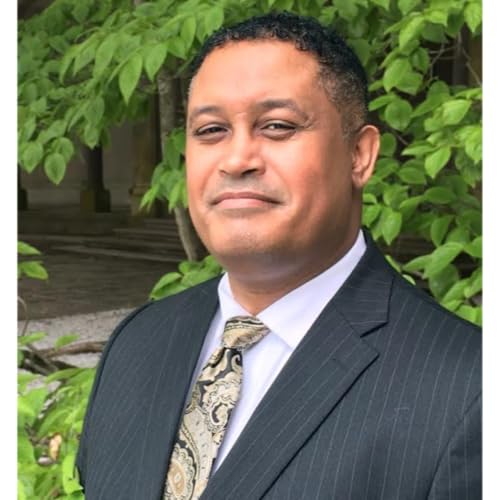
Mr. Lucky

M.A., Master of Advocacy and Political Leadership (MAPL)

M.S., Graduate Student, School of Urban Education

See My Book: www.weusoursluckybooks.com

The Metro State Black Student Achievers Podcast was created to reach Black youth in charter schools, churches, recreation centers, barbershops, hair salons, and community spaces where many have been led to believe higher education is not for them. The mission is to bring real stories of Metro State students and graduates directly into these environments so young people hear voices that reflect their identities, experiences, and potential. The podcast also functions as an instructional tool, with select episodes paired with lesson plans highlighting Black innovators including the Black nurse who invented the home security system, the Freedom House Ambulance Service—the first modern EMS—and the Black nurses who served in every major American war. These materials help students collaborate with peers, complete activities at home, and allow educators to integrate the content into their courses. The mission also models self‑determination by showing this podcast was created without begging for money, without seeking validation, and by embracing the mindset of asking “What can I do?” instead of “What can’t I do?” The vision is to cultivate a generation of Black youth who see themselves as scholars, innovators, and leaders, transforming community spaces into learning spaces, elevating overlooked Black excellence, and building a culture where young people pursue goals with confidence, dignity, and purpose. Black students do not need permission to achieve—they need opportunity, representation, and courage. The podcast stands as an example of what is possible when students lead with purpose and institutions support authentic student voice. It advances the university’s commitments to student leadership, equity, culturally responsive engagement, community partnership, academic access, and the amplification of historically marginalized voices.

Lucky is an award‑winning educator and community leader with 15+ years of experience in secondary education, juvenile justice, and public service. He has developed culturally responsive curricula, mentored educators, and taught Leadership, Race in America, and Community Organizing. His work has increased student achievement, reduced disciplinary incidents, and supported legislative efforts that secured over $355,000 for student programs. His leadership has earned recognition across Minnesota and beyond, including induction into the National Society of Leadership and Success, the Pillsbury United Communities Service Award, and commendations from Ramsey County Corrections, the U.S. Army, and state civic institutions. He chaired the Governor’s Legacy Committee, overseeing $240,000 in arts grants with a perfect audit. His background includes roles as Juvenile Probation Officer, Paralegal, Veterans Case Manager, Urban Elder Teacher Coach, Park Police and Military Police Officer. He has authored four books and released a gospel album produced by Numero Records. He holds advanced degrees in Advocacy, Leadership, Social Sciences, Counseling Psychology, Paralegal Studies, and Law Enforcement, and is completing a second master’s in education. “When people talk behind your back, remember—they’re behind you for a reason.” “During struggles, always ask what I can do—never what can’t I do.”

This podcast is student‑run and operates under the First Amendment.

radiotalklr@gmail.com Phone: 773-809-8594

Personal Development Personal Success Social Sciences
Episodes
  • Aimee Bock (aka Shirley Temple) and Mr. T.
    May 22 2026

    Educated People Can Have Fun and Laugh

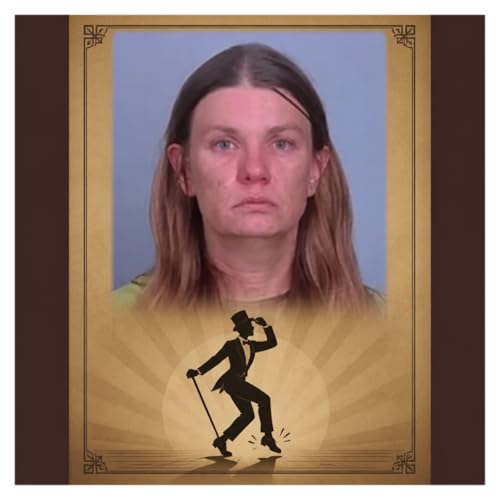
    Aimee Bock (aka Shirley Temple) didn’t just walk into Minnesota’s nonprofit world — she twirled in like a tap‑dancing prodigy from a 1930s movie reel. With a smile sweet enough to charm a courtroom and an innocence polished to a Hollywood shine, she projected the kind of “golly‑gee” wholesomeness that made people believe every grant, every meal count, every signature was pure as sugar.

    But behind the curls‑and‑dimples routine was a performance far more elaborate than any Shirley Temple musical. While the public saw a benevolent leader feeding children, the backstage reality was a choreography of paperwork, partnerships, and meal claims that didn’t always match the script. The spotlight she sought for her organization slowly shifted, revealing shadows where the applause used to be.

    As the allegations grew louder, the contrast sharpened: the child‑star innocence she projected versus the federal‑investigation gravity surrounding her. It wasn’t just a fall from grace — it was a tap‑dance routine gone off‑beat, a show where the props didn’t match the story, and the audience suddenly realized the orchestra had stopped playing.

    In the world of MinneFrauda, where trust is currency and oversight is the stage manager, her act became a cautionary tale: a reminder that even the brightest smile can hide the most complicated script, and even the sweetest persona can lead an entire cast into chaos when the performance collapses.

    Show More Show Less
    18 mins
  • Professor: Dr. Robinson — Introducing Black Studies
    May 20 2026

    Lesson Plan: Black Studies & Voice — Featuring Dr. James A. Robinson

    Learning Objective (1)

    For the Worksheet That Goes with This Lesson Plan email: radiotalklr@gmail.com

    Students will analyze how Black Studies is defined, practiced, and shared by examining Dr. Robinson’s scholarship and the Metro State Black Student Achievers Podcast as parallel forms of knowledge production.

    Example: A student explains how Robinson’s research on Black railroad labor and the podcast’s student stories both recover voices often excluded from mainstream narratives.

    Learning Outcome (1)

    Students will identify one way Black Studies empowers communities and provide evidence from either Robinson’s work or a podcast episode.

    Example: “The podcast shows how Black students narrate their own academic journeys, which aligns with Robinson’s learner‑centered approach.”

    5E Learning Model

    Engage

    Play a 30–45 second clip from the Metro State Black Student Achievers Podcast. Ask: Whose voices are centered here? Why does that matter?

    Explore

    Students read short excerpts from Dr. Robinson’s biography. In groups, they connect his work to the podcast’s mission: defining Black Studies, elevating community knowledge, and documenting lived experience.

    Explain

    Students answer: What is Black Studies? Where is it learned? They use evidence from Robinson’s research AND the podcast’s storytelling.

    Elaborate

    Students map the eight guiding questions onto the podcast: e.g., What do students learn in Black Studies? How does the podcast model that learning?

    Evaluate (Formative Assessment)

    Exit Ticket: “Using Dr. Robinson’s work or a podcast episode, explain why Black Studies is important for students and communities.”

    Show More Show Less
    1 hr and 13 mins
  • Dr. Walter D. Greason: African American Life and History
    May 18 2026

    See My Book: www.weusoursluckybooks.com

    Contact Dr. Greason; wgreason@macalester.edu

    The Graphic History of Hip Hop

    https://www.graphichistorycompany.com/graphichistoryofhiphop

    Lesson Plan: Reimagining Communities through Afrofuturism and Economic Justice

    (Based on themes from WalterDGreason.com)

    Overview

    Dr. Walter D. Greason’s work blends history, economics, Afrofuturism, and digital innovation to show how communities can rebuild themselves through cultural preservation and creative problem‑solving. His projects demonstrate how understanding the past helps us design a more just future.

    Learning Objectives

    1. Students will analyze how Afrofuturism and historic preservation can transform vulnerable communities. Example: Students review Greason’s Eatonville preservation work and explain how protecting cultural history strengthens community identity.
    2. Students will evaluate how digital innovation can promote racial and economic equity. Example: Students explore The Graphic History of Hip Hop and identify how technology communicates social justice messages.

    Learning Outcomes

    1. Students will demonstrate understanding of interdisciplinary approaches to community uplift. Example: Students create a short presentation connecting Afrofuturism to a local urban renewal effort.
    2. Students will apply Greason’s model of cultural preservation to propose solutions for modern issues. Example: Students design a mini‑plan to revitalize a local landmark using digital storytelling.

    5E Learning Model (Student‑Friendly Version)

    Engage — Get Curious

    Students watch a short clip or explore images from Greason’s Eatonville project. They discuss: “Why does preserving history matter for our future?”

    Explore — Investigate the Ideas

    Students work in small groups to explore one of Greason’s projects (Eatonville, Gallier House, Graphic History of Hip Hop). They take notes on how history, art, and economics connect.

    Explain — Make Meaning

    The teacher breaks down how Afrofuturism, economics, and cultural design work together. Students share what they discovered and connect it to real‑world community issues.

    Elaborate — Apply What You Learned

    Students create a digital poster, short essay, or mini‑proposal showing how they would preserve or redesign a local space using Greason’s principles.

    Evaluate — Show What You Understand

    Students reflect on how creative history can inspire social change. They share their ideas with peers and give feedback.

    Formative Assessment

    Reflection Journal Prompt:

    • How does Afrofuturism help us imagine better communities?
    • What lessons from Dr. Greason’s work could help improve your city or school?

    To Be a Guest on This Podcast Email: radiotalklr@gmail.com

    Show More Show Less
    35 mins
adbl_web_anon_alc_button_suppression_c
No reviews yet