
Showing results by narrator "Macat" in All Categories
-

-
Analysis: A Macat Analysis of J. A. Hobson's Imperialism: A Study
- By: Riley Quinn
- Narrated by: Macat.com
- Length: 1 hr and 50 mins
- Unabridged
-
Overall2
-
Performance2
-
Story2
J. A. (John) Hobson's 1902 book, Imperialism: A Study, presents an original and controversial interpretation of the forces that motivated Britain to conquer foreign lands in the 18th century. Hobson advances the idea that ultrawealthy financiers consciously worked to manipulate political leaders, all so they could invest money and sell goods in the outposts of a country's empire.
Preview -
Analysis: A Macat Analysis of J. A. Hobson's Imperialism: A Study
- Narrated by: Macat.com
- Length: 1 hr and 50 mins
- Release date: 06-06-16
- Language: English
Failed to add items
Sorry, we are unable to add the item because your shopping cart is already at capacity.Add to basket failed.
Please try again laterAdd to wishlist failed.
Please try again laterRemove from wishlist failed.
Please try again laterAdding to library failed
Please try againFollow podcast failed
Unfollow podcast failed
£6.57 or free with trial. Auto-renews at £5.99/month after trial. See eligibility.
-
-

-
Analysis: A Macat Analysis of Bernard Bailyn's The Ideological Origins of the American Revolution
- By: Joshua Specht, Pierre-Etienne Stockland
- Narrated by: Macat.com
- Length: 1 hr and 54 mins
- Unabridged
-
Overall0
-
Performance0
-
Story0
Before Bernard Bailyn published The Ideological Origins of the American Revolution in 1967, it was generally believed that the Revolution was driven both by social conflict between colonial settlers and the ruling British government, and by differences between classes in American society. Bailyn had a different view. He said that it was radical ideas that fired the American Revolution, and that the Revolution was above all else an ideological, constitutional, and political struggle.
Preview -
Analysis: A Macat Analysis of Bernard Bailyn's The Ideological Origins of the American Revolution
- Narrated by: Macat.com
- Length: 1 hr and 54 mins
- Release date: 01-07-16
- Language: English
Failed to add items
Sorry, we are unable to add the item because your shopping cart is already at capacity.Add to basket failed.
Please try again laterAdd to wishlist failed.
Please try again laterRemove from wishlist failed.
Please try again laterAdding to library failed
Please try againFollow podcast failed
Unfollow podcast failed
£6.57 or free with trial. Auto-renews at £5.99/month after trial. See eligibility.
-
-

-
Analysis: A Macat Analysis of Edward E. Evans-Pritchard's Witchcraft, Oracles, and Magic Among the Azande
- By: Kitty Wheater
- Narrated by: Macat.com
- Length: 1 hr and 55 mins
- Unabridged
-
Overall0
-
Performance0
-
Story0
Social anthropologist Edward Evans-Pritchard wrote Witchcraft, Oracles, and Magic Among the Azande after 20 months' fieldwork with the Azande people of the South Sudan. It became the founding text in the anthropology of witchcraft, and has been hailed as a classic. Although Witchcraft had little impact when it first appeared in 1937, its popularity grew after World War II. Alongside his subsequent work on the Nuer people, Witchcraft established Evans-Pritchard's reputation as an important anthropologist.
Preview -
Analysis: A Macat Analysis of Edward E. Evans-Pritchard's Witchcraft, Oracles, and Magic Among the Azande
- Narrated by: Macat.com
- Length: 1 hr and 55 mins
- Release date: 01-07-16
- Language: English
Failed to add items
Sorry, we are unable to add the item because your shopping cart is already at capacity.Add to basket failed.
Please try again laterAdd to wishlist failed.
Please try again laterRemove from wishlist failed.
Please try again laterAdding to library failed
Please try againFollow podcast failed
Unfollow podcast failed
£6.57 or free with trial. Auto-renews at £5.99/month after trial. See eligibility.
-
-

-
A Macat Analysis of John P. Kotter's Leading Change
- By: Yaamina Salman, Nick Broten
- Narrated by: Macat.com
- Length: 1 hr and 31 mins
- Unabridged
-
Overall0
-
Performance0
-
Story0
A professor at Harvard Business School, Kotter spent years coaching organizations - large and small; successful, less successful, and nearly bankrupt - through their own change processes. Some worked; others didn't. Distilling wisdom from these experiences, Kotter identifies eight common mistakes managers make implementing change. He then uses them to propose an eight-stage model that he argues can lead to successful organizational transformation.
Preview -
A Macat Analysis of John P. Kotter's Leading Change
- Narrated by: Macat.com
- Length: 1 hr and 31 mins
- Release date: 09-06-16
- Language: English
Failed to add items
Sorry, we are unable to add the item because your shopping cart is already at capacity.Add to basket failed.
Please try again laterAdd to wishlist failed.
Please try again laterRemove from wishlist failed.
Please try again laterAdding to library failed
Please try againFollow podcast failed
Unfollow podcast failed
£6.57 or free with trial. Auto-renews at £5.99/month after trial. See eligibility.
-
-

-
A Macat Analysis of St. Benedict's The Rule of St. Benedict
- By: Benjamin Laird
- Narrated by: Macat.com
- Length: 1 hr and 12 mins
- Unabridged
-
Overall0
-
Performance0
-
Story0
Although it is nearly 1,500 years old, The Rule of St. Benedict remains one of the most influential texts in the Western monastic movement. It offers a unique insight into the early development of Christian monasticism as monks secluded themselves from the world to fulfil religious vows. For believers, it continues to offer guidance about incorporating meditation and prayer into devotions, the quiet times of reflection when the focus is on God, through prayer or Bible study.
Preview -
A Macat Analysis of St. Benedict's The Rule of St. Benedict
- Narrated by: Macat.com
- Length: 1 hr and 12 mins
- Release date: 30-05-16
- Language: English
Failed to add items
Sorry, we are unable to add the item because your shopping cart is already at capacity.Add to basket failed.
Please try again laterAdd to wishlist failed.
Please try again laterRemove from wishlist failed.
Please try again laterAdding to library failed
Please try againFollow podcast failed
Unfollow podcast failed
£5.98 or free with trial. Auto-renews at £5.99/month after trial. See eligibility.
-
-

-
Analysis: A Macat Analysis of Gilbert Ryle's The Concept of Mind
- By: Michael O'Sullivan
- Narrated by: Macat.com
- Length: 1 hr and 40 mins
- Unabridged
-
Overall0
-
Performance0
-
Story0
Seventeenth-century French writer René Descartes, one of the fathers of philosophy, imagined the mind and body as two separate entities that combine to form a human being. This concept came to be called "mind-body dualism." Ryle set about ridiculing Descartes's idea of, as he put it, a "ghost in the machine" stating that it was "entirely false, and false not in detail but in principle...not merely an assemblage of particular mistakes. It is one big mistake and a mistake of a special kind."
Preview -
Analysis: A Macat Analysis of Gilbert Ryle's The Concept of Mind
- Narrated by: Macat.com
- Length: 1 hr and 40 mins
- Release date: 02-06-16
- Language: English
Failed to add items
Sorry, we are unable to add the item because your shopping cart is already at capacity.Add to basket failed.
Please try again laterAdd to wishlist failed.
Please try again laterRemove from wishlist failed.
Please try again laterAdding to library failed
Please try againFollow podcast failed
Unfollow podcast failed
£6.57 or free with trial. Auto-renews at £5.99/month after trial. See eligibility.
-
-

-
A Macat Analysis of Henry Kissinger's World Order: Reflections on the Character of Nations and the Course of History
- By: Bryan R. Gibson
- Narrated by: Macat.com
- Length: 1 hr and 47 mins
- Unabridged
-
Overall1
-
Performance1
-
Story1
World Order draws together Henry Kissinger's thinking on how we make sense of the world politically. Kissinger identifies four principal competing methods by which order has been and is still sought. Those four conceptions are European, Chinese, Islamic, and American. None of these has been accepted as dominant. Kissinger asks whether a new, universal world order can be developed today.
Preview -
A Macat Analysis of Henry Kissinger's World Order: Reflections on the Character of Nations and the Course of History
- Narrated by: Macat.com
- Length: 1 hr and 47 mins
- Release date: 14-07-16
- Language: English
Failed to add items
Sorry, we are unable to add the item because your shopping cart is already at capacity.Add to basket failed.
Please try again laterAdd to wishlist failed.
Please try again laterRemove from wishlist failed.
Please try again laterAdding to library failed
Please try againFollow podcast failed
Unfollow podcast failed
£6.57 or free with trial. Auto-renews at £5.99/month after trial. See eligibility.
-
-

-
Analysis: A Macat Analysis of Ernst H. Kantorowicz's The King's Two Bodies: A Study in Medieval Political Theology
- By: Simon Thomson
- Narrated by: Macat.com
- Length: 1 hr and 46 mins
- Unabridged
-
Overall1
-
Performance1
-
Story1
Examining 1,200 years of history from the foundation of Charlemagne's Holy Roman Empire to the beheading of King Charles I in England is in itself a mammoth undertaking. But it is the issues explored by German American historian Ernst H. Kantorowicz in his 1957 study The King's Two Bodies that have had a profound effect on the way academics think about the study of history.
Preview -
Analysis: A Macat Analysis of Ernst H. Kantorowicz's The King's Two Bodies: A Study in Medieval Political Theology
- Narrated by: Macat.com
- Length: 1 hr and 46 mins
- Release date: 09-06-16
- Language: English
Failed to add items
Sorry, we are unable to add the item because your shopping cart is already at capacity.Add to basket failed.
Please try again laterAdd to wishlist failed.
Please try again laterRemove from wishlist failed.
Please try again laterAdding to library failed
Please try againFollow podcast failed
Unfollow podcast failed
£7.23 or free with trial. Auto-renews at £5.99/month after trial. See eligibility.
-
-

-
Analysis: A Macat Analysis of Daniel Jonah Goldhagen's Hitler's Willing Executioners
- By: Simon Taylor, Tom Stammers
- Narrated by: Macat.com
- Length: 1 hr and 42 mins
- Unabridged
-
Overall1
-
Performance1
-
Story1
American author Daniel Jonah Goldhagen's 1996 work, Hitler's Willing Executioners, is one of the most controversial history books of modern times. While most historians have sought to explain the horror of the Holocaust by focusing on Nazi leaders and their ideologies, Goldhagen set out to investigate whether ordinary Germans enthusiastically embraced their goals. His conclusion: "eliminationist anti-Semitism" - a genocidal hatred of Jews unique to Germany - caused the Holocaust.
Preview -
Analysis: A Macat Analysis of Daniel Jonah Goldhagen's Hitler's Willing Executioners
- Narrated by: Macat.com
- Length: 1 hr and 42 mins
- Release date: 06-06-16
- Language: English
Failed to add items
Sorry, we are unable to add the item because your shopping cart is already at capacity.Add to basket failed.
Please try again laterAdd to wishlist failed.
Please try again laterRemove from wishlist failed.
Please try again laterAdding to library failed
Please try againFollow podcast failed
Unfollow podcast failed
£6.57 or free with trial. Auto-renews at £5.99/month after trial. See eligibility.
-
-

-
A Macat Analysis of Thomas Robert Malthus's An Essay on the Principle of Population
- By: Nick Broten
- Narrated by: Macat.com
- Length: 1 hr and 39 mins
- Unabridged
-
Overall0
-
Performance0
-
Story0
One of the most influential books on economics ever written, Thomas Robert Malthus's An Essay on the Principle of Population remains one of the most controversial too. This 1798 work inspired naturalists Charles Darwin and Alfred Russel Wallace to develop the theory of natural selection. But it has also sparked criticism - Karl Marx famously called Malthus a "lackey of the bourgeoisie." Yet this hasn't stopped leading present-day environmentalists from taking up Malthus's ideas.
Preview -
A Macat Analysis of Thomas Robert Malthus's An Essay on the Principle of Population
- Narrated by: Macat.com
- Length: 1 hr and 39 mins
- Release date: 06-06-16
- Language: English
Failed to add items
Sorry, we are unable to add the item because your shopping cart is already at capacity.Add to basket failed.
Please try again laterAdd to wishlist failed.
Please try again laterRemove from wishlist failed.
Please try again laterAdding to library failed
Please try againFollow podcast failed
Unfollow podcast failed
£6.57 or free with trial. Auto-renews at £5.99/month after trial. See eligibility.
-
-
-

-
A Macat Analysis of John W. Dower's War Without Mercy: Race and Power in the Pacific War
- By: Vincent Sánchez, Jason Xidias
- Narrated by: Macat.com
- Length: 1 hr and 46 mins
- Unabridged
-
Overall2
-
Performance2
-
Story2
In his 1986 book War Without Mercy, American historian John Dower examines Japanese-American relations during World War II and investigates links between popular culture, stereotypes, and extreme violence. He argues that it was the concept of racism - used equally by both sides - that underpinned the military conflict and led to a particularly brutal war in the Pacific and East Asia.
-
-
Disappointment
- By Welsh Bob on 10-01-24
Preview -
A Macat Analysis of John W. Dower's War Without Mercy: Race and Power in the Pacific War
- Narrated by: Macat.com
- Length: 1 hr and 46 mins
- Release date: 08-06-16
- Language: English
Failed to add items
Sorry, we are unable to add the item because your shopping cart is already at capacity.Add to basket failed.
Please try again laterAdd to wishlist failed.
Please try again laterRemove from wishlist failed.
Please try again laterAdding to library failed
Please try againFollow podcast failed
Unfollow podcast failed
£6.57 or free with trial. Auto-renews at £5.99/month after trial. See eligibility.
-
-
-
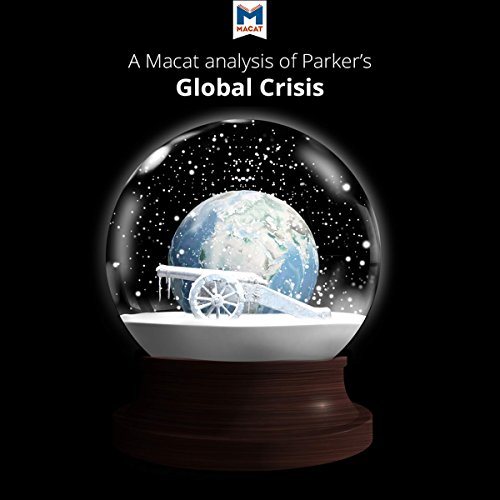
A Macat Analysis of Geoffrey Parker's Global Crisis
- War, Climate Change and Catastrophe in the Seventeenth Century
- By: Ian Jackson
- Narrated by: Macat.com
- Length: 1 hr and 53 mins
- Unabridged
-
Overall1
-
Performance1
-
Story1
Distinguished British historian Geoffrey Parker spent 15 years writing this ambitious history of the tumultuous 17th century, when nations were in the grip of what was known as the General Crisis. First published in 2013, Global Crisis reveals that freak weather was a key reason why the people of the 1600s lurched between droughts, famines, and countless wars.
-
-
Interesting subject but not to listen to in this format
- By Richard on 04-01-23
Preview -
A Macat Analysis of Geoffrey Parker's Global Crisis
- War, Climate Change and Catastrophe in the Seventeenth Century
- Narrated by: Macat.com
- Length: 1 hr and 53 mins
- Release date: 27-06-16
- Language: English
Failed to add items
Sorry, we are unable to add the item because your shopping cart is already at capacity.Add to basket failed.
Please try again laterAdd to wishlist failed.
Please try again laterRemove from wishlist failed.
Please try again laterAdding to library failed
Please try againFollow podcast failed
Unfollow podcast failed
£6.57 or free with trial. Auto-renews at £5.99/month after trial. See eligibility.
-
-

-
A Macat Analysis of Ian Kershaw's The "Hitler Myth": Image and Reality in the Third Reich
- By: Helen Roche
- Narrated by: Macat.com
- Length: 1 hr and 45 mins
- Unabridged
-
Overall1
-
Performance1
-
Story1
First published in Germany in 1980, British historian Ian Kershaw's The "Hitler Myth" is recognized as one of the most important books ever written about Adolf Hitler and the Nazi State. Kershaw wanted to focus on what he called the "history of everyday life", and so investigated the attitude of the German public to Hitler at the time, rather than looking at the dictator from the perspective of those in positions of power. He was intrigued to find out how someone like Hitler could have become such a powerful figure.
-
-
Pointless
- By Ed berns on 28-12-18
Preview -
A Macat Analysis of Ian Kershaw's The "Hitler Myth": Image and Reality in the Third Reich
- Narrated by: Macat.com
- Length: 1 hr and 45 mins
- Release date: 19-07-16
- Language: English
Failed to add items
Sorry, we are unable to add the item because your shopping cart is already at capacity.Add to basket failed.
Please try again laterAdd to wishlist failed.
Please try again laterRemove from wishlist failed.
Please try again laterAdding to library failed
Please try againFollow podcast failed
Unfollow podcast failed
£6.57 or free with trial. Auto-renews at £5.99/month after trial. See eligibility.
-
-

-
Analysis: A Macat Analysis of John Maynard Keynes's The General Theory of Employment, Interest and Money
- By: John Collins
- Narrated by: Macat.com
- Length: 1 hr and 48 mins
- Unabridged
-
Overall2
-
Performance1
-
Story1
In his 1936 book The General Theory of Employment, Interest and Money, Keynes argued that traditional economics has misunderstood the causes of unemployment. Employment is not determined by the price of labor; it is directly linked to demand in the economy. Keynes believed market economies are by nature unstable and so require government intervention. Spurred on by the social catastrophe of the Great Depression of the 1930s, Keynes set out to change the way the world thinks about economics.
Preview -
Analysis: A Macat Analysis of John Maynard Keynes's The General Theory of Employment, Interest and Money
- Narrated by: Macat.com
- Length: 1 hr and 48 mins
- Release date: 30-06-16
- Language: English
Failed to add items
Sorry, we are unable to add the item because your shopping cart is already at capacity.Add to basket failed.
Please try again laterAdd to wishlist failed.
Please try again laterRemove from wishlist failed.
Please try again laterAdding to library failed
Please try againFollow podcast failed
Unfollow podcast failed
£6.57 or free with trial. Auto-renews at £5.99/month after trial. See eligibility.
-
-

-
Analysis: A Macat Analysis of Thomas Paine's The Rights of Man
- By: Mariana Assis, Jason Xidias
- Narrated by: Macat.com
- Length: 1 hr and 45 mins
- Unabridged
-
Overall3
-
Performance3
-
Story3
British-born American political activist Thomas Paine wrote Rights of Man in 1791 in response to Reflections on the Revolution in France, Edmund Burke's attack on the French Revolution. Burke was wary of tearing down old institutions of government. But Paine argued that revolution is acceptable - in fact, necessary - when government ignores the rights of its people. Not surprisingly, Rights of Man proved very popular in the newly liberated United States, selling over 100,000 copies.
Preview -
Analysis: A Macat Analysis of Thomas Paine's The Rights of Man
- Narrated by: Macat.com
- Length: 1 hr and 45 mins
- Release date: 06-06-16
- Language: English
Failed to add items
Sorry, we are unable to add the item because your shopping cart is already at capacity.Add to basket failed.
Please try again laterAdd to wishlist failed.
Please try again laterRemove from wishlist failed.
Please try again laterAdding to library failed
Please try againFollow podcast failed
Unfollow podcast failed
£6.57 or free with trial. Auto-renews at £5.99/month after trial. See eligibility.
-
-

-
Analysis: A Macat Analysis of John Locke's Two Treatises of Government
- By: Jeremy Kleidosty, Ian Jackson
- Narrated by: Macat.com
- Length: 1 hr and 45 mins
- Unabridged
-
Overall3
-
Performance3
-
Story3
First available in 1689, John Locke's Two Treatises of Government is considered one of the most important works ever written on the foundations of government. Published anonymously, it argues against the popular idea at the time that monarchs have a God-given right to rule. Instead Locke proposes that sovereignty - supreme authority - ultimately resides with the people.
Preview -
Analysis: A Macat Analysis of John Locke's Two Treatises of Government
- Narrated by: Macat.com
- Length: 1 hr and 45 mins
- Release date: 06-06-16
- Language: English
Failed to add items
Sorry, we are unable to add the item because your shopping cart is already at capacity.Add to basket failed.
Please try again laterAdd to wishlist failed.
Please try again laterRemove from wishlist failed.
Please try again laterAdding to library failed
Please try againFollow podcast failed
Unfollow podcast failed
£6.57 or free with trial. Auto-renews at £5.99/month after trial. See eligibility.
-
-

-
A Macat Analysis of Michael E. Porter's Competitive Strategy: Techniques for Analyzing Industries and Competitors
- By: Pádraig Belton
- Narrated by: Macat.com
- Length: 2 hrs and 19 mins
- Unabridged
-
Overall2
-
Performance1
-
Story1
Published in 1980, Michael E. Porter's Competitive Strategy went against the accepted wisdom of the time that said firms should focus on expanding their market share. Porter claimed they should, in fact, analyze the five forces that mold the environment in which they compete: new entrants, substitute products, buyers, suppliers, and industry rivals. Then they could rationally choose one of three "generic strategies" - lowering cost, differentiating their product, or catering to a niche market.
Preview -
A Macat Analysis of Michael E. Porter's Competitive Strategy: Techniques for Analyzing Industries and Competitors
- Narrated by: Macat.com
- Length: 2 hrs and 19 mins
- Release date: 20-07-16
- Language: English
Failed to add items
Sorry, we are unable to add the item because your shopping cart is already at capacity.Add to basket failed.
Please try again laterAdd to wishlist failed.
Please try again laterRemove from wishlist failed.
Please try again laterAdding to library failed
Please try againFollow podcast failed
Unfollow podcast failed
£7.75 or free with trial. Auto-renews at £5.99/month after trial. See eligibility.
-
-

-
Analysis: A Macat Analysis of Plato's Republic
- By: James Orr
- Narrated by: Macat.com
- Length: 1 hr and 30 mins
- Unabridged
-
Overall1
-
Performance1
-
Story1
An extraordinarily ambitious work, Republic has made important contributions to many branches of modern philosophy. The work unfolds as a series of conversations in which participants set out a number of different theories of justice, and then imagine how these theories might become reality within the political structure of a city. In examining justice, Plato investigates an enormous range of questions in the areas of ethics, politics, and even the nature of existence itself.
Preview -
Analysis: A Macat Analysis of Plato's Republic
- Narrated by: Macat.com
- Length: 1 hr and 30 mins
- Release date: 30-06-16
- Language: English
Failed to add items
Sorry, we are unable to add the item because your shopping cart is already at capacity.Add to basket failed.
Please try again laterAdd to wishlist failed.
Please try again laterRemove from wishlist failed.
Please try again laterAdding to library failed
Please try againFollow podcast failed
Unfollow podcast failed
£6.57 or free with trial. Auto-renews at £5.99/month after trial. See eligibility.
-
-

-
Analysis: A Macat Analysis of Edmund Gettier's Is Justified True Belief Knowledge?
- By: Jason Schukraft
- Narrated by: Macat.com
- Length: 1 hr and 33 mins
- Unabridged
-
Overall1
-
Performance1
-
Story1
How do we know what knowledge is? In his 1963 article, "Is Justified True Belief Knowledge?", American philosopher Edmund Gettier radically challenged the accepted definition of knowledge itself. Greek philosopher Plato, discussing knowledge well over 2,000 years ago, defined it as "justified true belief". But in two ingenious cases, Gettier demonstrates that somebody's justified belief can be true because of nothing more than luck.
Preview -
Analysis: A Macat Analysis of Edmund Gettier's Is Justified True Belief Knowledge?
- Narrated by: Macat.com
- Length: 1 hr and 33 mins
- Release date: 06-06-16
- Language: English
Failed to add items
Sorry, we are unable to add the item because your shopping cart is already at capacity.Add to basket failed.
Please try again laterAdd to wishlist failed.
Please try again laterRemove from wishlist failed.
Please try again laterAdding to library failed
Please try againFollow podcast failed
Unfollow podcast failed
£6.57 or free with trial. Auto-renews at £5.99/month after trial. See eligibility.
-
-

-
Analysis: A Macat Analysis of Søren Kierkegaard's The Sickness unto Death
- By: Shirin Shafaie
- Narrated by: Macat.com
- Length: 1 hr and 53 mins
- Unabridged
-
Overall5
-
Performance5
-
Story5
Søren Kierkegaard has long been considered the father of the philosophical movement known as Christian existentialism, which focuses on the living human being. In his major 1849 work, The Sickness unto Death, he takes listeners on a journey from the human self, its spirit, despair and sin, through to faith.
-
-
Not an analysis of The sickness unto Death
- By Anonymous on 11-03-22
Preview -
Analysis: A Macat Analysis of Søren Kierkegaard's The Sickness unto Death
- Narrated by: Macat.com
- Length: 1 hr and 53 mins
- Release date: 29-07-16
- Language: English
Failed to add items
Sorry, we are unable to add the item because your shopping cart is already at capacity.Add to basket failed.
Please try again laterAdd to wishlist failed.
Please try again laterRemove from wishlist failed.
Please try again laterAdding to library failed
Please try againFollow podcast failed
Unfollow podcast failed
£6.57 or free with trial. Auto-renews at £5.99/month after trial. See eligibility.
-