
Showing results by narrator "Macat.com" in All Categories
-
-
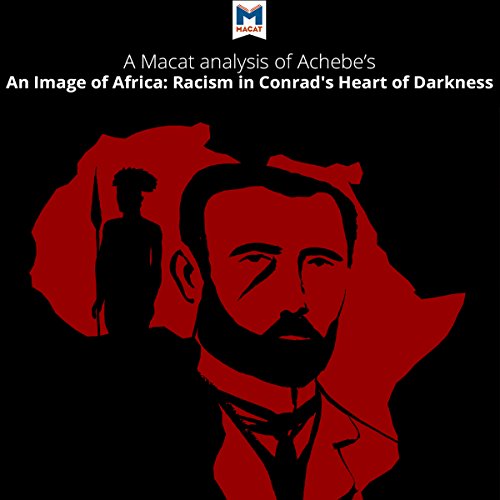
Analysis: A Macat Analysis of Chinua Achebe's An Image of Africa: Racism in Conrad's Heart of Darkness
- By: Lindsay Scorgie-Porter
- Narrated by: Macat.com
- Length: 1 hr and 40 mins
- Unabridged
-
Overall2
-
Performance2
-
Story2
Nigerian novelist and professor Chinua Achebe was acutely conscious that Western views of Africa were inevitably the views of a culture that assumed itself superior. When confronted by what it took to be an inferior culture, the West identified itself as better - materially, intellectually, even spiritually. Achebe believed that even as original and subtle a work as Joseph Conrad's Heart of Darkness - a novel seen by many as a criticism of colonialism and one that Achebe admired stylistically - reflected these assumptions.
-
-
Achebe. Will always remain one of the legends of rational thinking and literature
- By Solomon on 14-03-19
Preview -
Analysis: A Macat Analysis of Chinua Achebe's An Image of Africa: Racism in Conrad's Heart of Darkness
- Narrated by: Macat.com
- Length: 1 hr and 40 mins
- Release date: 06-06-16
- Language: English
Failed to add items
Sorry, we are unable to add the item because your shopping cart is already at capacity.Add to basket failed.
Please try again laterAdd to wishlist failed.
Please try again laterRemove from wishlist failed.
Please try again laterAdding to library failed
Please try againFollow podcast failed
Unfollow podcast failed
£6.57 or free with trial. Auto-renews at £5.99/month after trial. See eligibility.
-
-
-
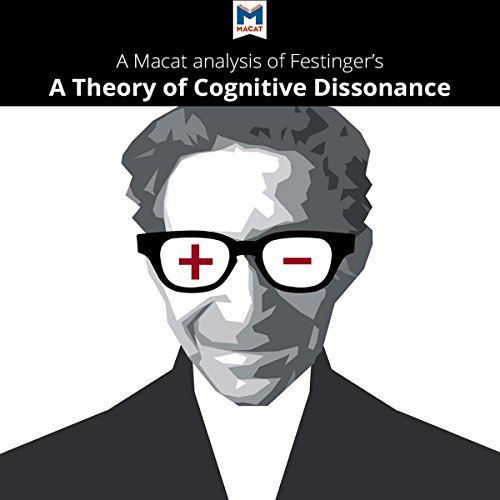
A Macat Analysis of Leon Festinger's A Theory of Cognitive Dissonance
- By: Camille Morvan, Alexander J. O'Connor
- Narrated by: Macat.com
- Length: 1 hr and 38 mins
- Unabridged
-
Overall0
-
Performance0
-
Story0
Why do we want to justify our decisions, even if they appear to be irrational? The answer lies in cognitive dissonance, the mental discomfort we experience when we hold two contradictory beliefs at the same time. In A Theory of Cognitive Dissonance, first published in 1957, American social psychologist Leon Festinger investigates the problem. Festinger puts forward the idea that we have developed mechanisms to try to deal with the stress brought on by cognitive dissonance.
Preview -
A Macat Analysis of Leon Festinger's A Theory of Cognitive Dissonance
- Narrated by: Macat.com
- Length: 1 hr and 38 mins
- Release date: 30-06-16
- Language: English
Failed to add items
Sorry, we are unable to add the item because your shopping cart is already at capacity.Add to basket failed.
Please try again laterAdd to wishlist failed.
Please try again laterRemove from wishlist failed.
Please try again laterAdding to library failed
Please try againFollow podcast failed
Unfollow podcast failed
£6.57 or free with trial. Auto-renews at £5.99/month after trial. See eligibility.
-
-

-
Analysis: A Macat Analysis of Mahmood Mamdani's Citizen and Subject
- By: Meike de Goede
- Narrated by: Macat.com
- Length: 1 hr and 58 mins
- Unabridged
-
Overall1
-
Performance0
-
Story0
In Citizen and Subject, Ugandan academic and author Mahmood Mamdani challenges dominant views about the crisis of postcolonial Africa. Many studies emphasize that the problems the continent faces are homegrown - the consequence of poor government, widespread corruption, and other local factors. Citizen and Subject challenged these ideas. It argues that the current crisis has come about because of the institutional legacy of colonialism.
Preview -
Analysis: A Macat Analysis of Mahmood Mamdani's Citizen and Subject
- Narrated by: Macat.com
- Length: 1 hr and 58 mins
- Release date: 06-06-16
- Language: English
Failed to add items
Sorry, we are unable to add the item because your shopping cart is already at capacity.Add to basket failed.
Please try again laterAdd to wishlist failed.
Please try again laterRemove from wishlist failed.
Please try again laterAdding to library failed
Please try againFollow podcast failed
Unfollow podcast failed
£6.57 or free with trial. Auto-renews at £5.99/month after trial. See eligibility.
-
-

-
Analysis: A Macat Analysis of Charles Darwin's On the Origin of Species by Means of Natural Selection, or The Preservation of Favoured Races in the Struggle for Life
- By: Kathleen Bryson, Nadejda Josephine Msindai
- Narrated by: Macat.com
- Length: 2 hrs
- Unabridged
-
Overall1
-
Performance1
-
Story1
English naturalist and geologist Charles Darwin first published On the Origin of Species in 1859. The idea of evolution and that all earth's species have descended from a common ancestor had already been around for some time. What was new about Darwin's work was that it found a way to explain evolution using a theory called natural selection. This claimed that species change in small ways, gradually, over long periods of time; the individuals who happen to be best suited to their environment survive.
Preview -
Analysis: A Macat Analysis of Charles Darwin's On the Origin of Species by Means of Natural Selection, or The Preservation of Favoured Races in the Struggle for Life
- Narrated by: Macat.com
- Length: 2 hrs
- Release date: 08-06-16
- Language: English
Failed to add items
Sorry, we are unable to add the item because your shopping cart is already at capacity.Add to basket failed.
Please try again laterAdd to wishlist failed.
Please try again laterRemove from wishlist failed.
Please try again laterAdding to library failed
Please try againFollow podcast failed
Unfollow podcast failed
£7.75 or free with trial. Auto-renews at £5.99/month after trial. See eligibility.
-
-

-
Analysis: A Macat Analysis of Benedict Anderson's Imagined Communities
- By: Jason Xidias
- Narrated by: Macat.com
- Length: 2 hrs and 8 mins
- Unabridged
-
Overall4
-
Performance2
-
Story2
Some people think nationhood is as old as civilization itself. But for anthropologist, historian, and political scientist Benedict Anderson, nation and nationalism are products of the communication technology of the era known as the modern age, which began in 1500. After the invention of the printing press around 1440, common local languages gradually replaced Latin as the language of print. Ordinary people could now share ideas of their own.
Preview -
Analysis: A Macat Analysis of Benedict Anderson's Imagined Communities
- Narrated by: Macat.com
- Length: 2 hrs and 8 mins
- Release date: 19-07-16
- Language: English
Failed to add items
Sorry, we are unable to add the item because your shopping cart is already at capacity.Add to basket failed.
Please try again laterAdd to wishlist failed.
Please try again laterRemove from wishlist failed.
Please try again laterAdding to library failed
Please try againFollow podcast failed
Unfollow podcast failed
£7.75 or free with trial. Auto-renews at £5.99/month after trial. See eligibility.
-
-

-
Analysis: A Macat Analysis of Jared M. Diamond's Collapse: How Societies Choose to Fail or Survive
- By: Rodolfo Maggio
- Narrated by: Macat.com
- Length: 2 hrs and 8 mins
- Unabridged
-
Overall2
-
Performance1
-
Story1
In his 2005 book Collapse: How Societies Choose to Fail or Succeed (also subtitled How Societies Choose to Fail or Survive), author and multifaceted US scholar Jared M. Diamond clearly identifies five major factors that he says determine the success or failure of all human societies in all periods of history. Having first asked why societies collapse, Diamond explores various examples of failed societies, from the Norsemen of Scandinavia, who colonized Greenland in the early 10th century, to the 18th-century inhabitants of Easter Island.
Preview -
Analysis: A Macat Analysis of Jared M. Diamond's Collapse: How Societies Choose to Fail or Survive
- Narrated by: Macat.com
- Length: 2 hrs and 8 mins
- Release date: 19-07-16
- Language: English
Failed to add items
Sorry, we are unable to add the item because your shopping cart is already at capacity.Add to basket failed.
Please try again laterAdd to wishlist failed.
Please try again laterRemove from wishlist failed.
Please try again laterAdding to library failed
Please try againFollow podcast failed
Unfollow podcast failed
£7.75 or free with trial. Auto-renews at £5.99/month after trial. See eligibility.
-
-

-
Analysis: A Macat Analysis of C. Wright Mills's The Sociological Imagination
- By: Robert Easthope
- Narrated by: Macat.com
- Length: 1 hr and 55 mins
- Unabridged
-
Overall5
-
Performance3
-
Story3
When American sociologist C. Wright Mills's The Sociological Imagination was first published in 1959, it provoked much hostile reaction. This was understandable: the book was a hard-hitting attack on how sociology was practiced - and on a number of leading sociologists. Mills was a fierce critic of both modern capitalism and Soviet-style authoritarianism, and argued that the sociology profession failed to look at how people's problems are connected to the structures of the society in which they live.
Preview -
Analysis: A Macat Analysis of C. Wright Mills's The Sociological Imagination
- Narrated by: Macat.com
- Length: 1 hr and 55 mins
- Release date: 27-07-16
- Language: English
Failed to add items
Sorry, we are unable to add the item because your shopping cart is already at capacity.Add to basket failed.
Please try again laterAdd to wishlist failed.
Please try again laterRemove from wishlist failed.
Please try again laterAdding to library failed
Please try againFollow podcast failed
Unfollow podcast failed
£6.57 or free with trial. Auto-renews at £5.99/month after trial. See eligibility.
-
-

-
A Macat Analysis of Elizabeth F. Loftus's Eyewitness Testimony
- By: William J. Jenkins
- Narrated by: Macat.com
- Length: 1 hr and 25 mins
- Unabridged
-
Overall1
-
Performance1
-
Story1
Elizabeth Loftus's 1979 work, Eyewitness Testimony, explains why people sometimes remember events inaccurately, and how this simple fact has a profound impact on the criminal justice system. Eyewitness accounts, which are often used in criminal trials, can be very persuasive to both judges and juries. Yet these accounts are based on memories that are not always reliable, meaning that suspects may be misidentified or wrongfully convicted.
Preview -
A Macat Analysis of Elizabeth F. Loftus's Eyewitness Testimony
- Narrated by: Macat.com
- Length: 1 hr and 25 mins
- Release date: 27-06-16
- Language: English
Failed to add items
Sorry, we are unable to add the item because your shopping cart is already at capacity.Add to basket failed.
Please try again laterAdd to wishlist failed.
Please try again laterRemove from wishlist failed.
Please try again laterAdding to library failed
Please try againFollow podcast failed
Unfollow podcast failed
£5.98 or free with trial. Auto-renews at £5.99/month after trial. See eligibility.
-
-

-
An Analysis of Philip Zimbardo's The Lucifer Effect: Understanding How Good People Turn Evil
- By: Alexander J. O'Connor
- Narrated by: Macat.com
- Length: 1 hr and 54 mins
- Unabridged
-
Overall5
-
Performance5
-
Story5
Born in 1933, Philip Zimbardo is a renowned and controversial American social psychologist who is fascinated by why people can sometimes behave in awful ways. Some psychologists believe people who commit cruelty are innately evil. Zimbardo disagrees. In his 2007 book, The Lucifer Effect, he argued that it is the power of situations around us that can cause otherwise good people to commit "evil", citing many historical examples to illustrate his point.
-
-
Brilliant Overall Summary
- By Rhiannon Walker on 23-09-24
Preview -
An Analysis of Philip Zimbardo's The Lucifer Effect: Understanding How Good People Turn Evil
- Narrated by: Macat.com
- Length: 1 hr and 54 mins
- Release date: 19-07-16
- Language: English
Failed to add items
Sorry, we are unable to add the item because your shopping cart is already at capacity.Add to basket failed.
Please try again laterAdd to wishlist failed.
Please try again laterRemove from wishlist failed.
Please try again laterAdding to library failed
Please try againFollow podcast failed
Unfollow podcast failed
£6.57 or free with trial. Auto-renews at £5.99/month after trial. See eligibility.
-
-

-
A Macat Analysis of Amartya Sen's Development as Freedom
- By: Janna Miletzki, Nick Broten
- Narrated by: Macat.com
- Length: 1 hr and 39 mins
- Unabridged
-
Overall4
-
Performance2
-
Story3
Economist Amartya Sen's 1997 work Development as Freedom presents a "middle way" approach to how we should look at international development, based on the idea that its success or failure cannot be measured by income alone. Having grown up in India, Sen brings his own understanding of what poverty really means to the issue, arguing that above all, the process and goal of development must be human freedom. He backs up this idea through his concept of "capabilities."
-
-
Very basic overview
- By A.S. on 28-03-23
Preview -
A Macat Analysis of Amartya Sen's Development as Freedom
- Narrated by: Macat.com
- Length: 1 hr and 39 mins
- Release date: 26-07-16
- Language: English
Failed to add items
Sorry, we are unable to add the item because your shopping cart is already at capacity.Add to basket failed.
Please try again laterAdd to wishlist failed.
Please try again laterRemove from wishlist failed.
Please try again laterAdding to library failed
Please try againFollow podcast failed
Unfollow podcast failed
£6.57 or free with trial. Auto-renews at £5.99/month after trial. See eligibility.
-
-
-

-
Analysis: A Macat Analysis of Max Weber's Politics as a Vocation
- By: Macat.com
- Narrated by: Macat.com
- Length: 1 hr and 48 mins
- Unabridged
-
Overall1
-
Performance1
-
Story0
Politics as a Vocation examines what makes good political leaders and explores the effects of political action on modern societies. On one level it summarizes the political scholarship of one of the founding fathers of social science. On another it reflects a leading German academic and political activist's practical concerns about the future at a time of great volatility following defeat in World War I.
Preview -
Analysis: A Macat Analysis of Max Weber's Politics as a Vocation
- Narrated by: Macat.com
- Length: 1 hr and 48 mins
- Release date: 06-06-16
- Language: English
Failed to add items
Sorry, we are unable to add the item because your shopping cart is already at capacity.Add to basket failed.
Please try again laterAdd to wishlist failed.
Please try again laterRemove from wishlist failed.
Please try again laterAdding to library failed
Please try againFollow podcast failed
Unfollow podcast failed
£6.57 or free with trial. Auto-renews at £5.99/month after trial. See eligibility.
-
-

-
Analysis: A Macat Analysis of C. S. Lewis's The Abolition of Man
- By: Ruth Jackson, Brittany Pheiffer Noble
- Narrated by: Macat.com
- Length: 1 hr and 37 mins
- Unabridged
-
Overall0
-
Performance0
-
Story0
Northern Irish academic, novelist, and broadcaster C. S. Lewis' 1943 philosophical work The Abolition of Man is subtitled Reflections on Education with Special Reference to the Teaching of English in the Upper Forms of Schools. It is about the power of education to shape the minds of individuals and improve society (or harm it, if badly done), and encompasses everything from the scientific worldview at the time to philosophical arguments about right and wrong.
Preview -
Analysis: A Macat Analysis of C. S. Lewis's The Abolition of Man
- Narrated by: Macat.com
- Length: 1 hr and 37 mins
- Release date: 29-07-16
- Language: English
Failed to add items
Sorry, we are unable to add the item because your shopping cart is already at capacity.Add to basket failed.
Please try again laterAdd to wishlist failed.
Please try again laterRemove from wishlist failed.
Please try again laterAdding to library failed
Please try againFollow podcast failed
Unfollow podcast failed
£6.57 or free with trial. Auto-renews at £5.99/month after trial. See eligibility.
-
-

-
Analysis: A Macat Analysis of G. E. M. Anscombe's "Modern Moral Philosophy"
- By: Jonny Blamey, Jon Thompson
- Narrated by: Macat.com
- Length: 1 hr and 36 mins
- Unabridged
-
Overall0
-
Performance0
-
Story0
In her 1958 article "Modern Moral Philosophy", British philosopher Elizabeth (G. E. M.) Anscombe does nothing less than challenge the very foundations of moral philosophy, the discipline that tries to understand right and wrong action. The article sets out three main ideas. First, that moral philosophy should not be explored until a philosophy of psychology is already in place. Second, that philosophers who do not believe in God should not use ideas about "obligation" and "duty".
Preview -
Analysis: A Macat Analysis of G. E. M. Anscombe's "Modern Moral Philosophy"
- Narrated by: Macat.com
- Length: 1 hr and 36 mins
- Release date: 30-06-16
- Language: English
Failed to add items
Sorry, we are unable to add the item because your shopping cart is already at capacity.Add to basket failed.
Please try again laterAdd to wishlist failed.
Please try again laterRemove from wishlist failed.
Please try again laterAdding to library failed
Please try againFollow podcast failed
Unfollow podcast failed
£6.57 or free with trial. Auto-renews at £5.99/month after trial. See eligibility.
-
-

-
An Analysis of Robert O. Keohane's After Hegemony
- By: Ramon Pacheco Pardo
- Narrated by: Macat.com
- Length: 1 hr and 43 mins
- Unabridged
-
Overall1
-
Performance1
-
Story1
The ideas set out by American international relations expert Robert O. Keohane in 1984's After Hegemony have had a huge impact on policy debates over the last three decades, both in political circles and in academia. Hegemony means the social, cultural, ideological or economic influence of one dominant group. Contemplating a post-Cold War world half a decade before the Berlin Wall fell, Keohane asks if international cooperation can survive in the absence of a single superpower.
-
-
Very bad analysis
- By ayman on 22-09-17
Preview -
An Analysis of Robert O. Keohane's After Hegemony
- Narrated by: Macat.com
- Length: 1 hr and 43 mins
- Release date: 06-06-16
- Language: English
Failed to add items
Sorry, we are unable to add the item because your shopping cart is already at capacity.Add to basket failed.
Please try again laterAdd to wishlist failed.
Please try again laterRemove from wishlist failed.
Please try again laterAdding to library failed
Please try againFollow podcast failed
Unfollow podcast failed
£6.57 or free with trial. Auto-renews at £5.99/month after trial. See eligibility.
-
-

-
Analysis: A Macat Analysis of Daniel Jonah Goldhagen's Hitler's Willing Executioners
- By: Simon Taylor, Tom Stammers
- Narrated by: Macat.com
- Length: 1 hr and 42 mins
- Unabridged
-
Overall1
-
Performance1
-
Story1
American author Daniel Jonah Goldhagen's 1996 work, Hitler's Willing Executioners, is one of the most controversial history books of modern times. While most historians have sought to explain the horror of the Holocaust by focusing on Nazi leaders and their ideologies, Goldhagen set out to investigate whether ordinary Germans enthusiastically embraced their goals. His conclusion: "eliminationist anti-Semitism" - a genocidal hatred of Jews unique to Germany - caused the Holocaust.
Preview -
Analysis: A Macat Analysis of Daniel Jonah Goldhagen's Hitler's Willing Executioners
- Narrated by: Macat.com
- Length: 1 hr and 42 mins
- Release date: 06-06-16
- Language: English
Failed to add items
Sorry, we are unable to add the item because your shopping cart is already at capacity.Add to basket failed.
Please try again laterAdd to wishlist failed.
Please try again laterRemove from wishlist failed.
Please try again laterAdding to library failed
Please try againFollow podcast failed
Unfollow podcast failed
£6.57 or free with trial. Auto-renews at £5.99/month after trial. See eligibility.
-
-

-
Analysis: A Macat Analysis of Ferdinand de Saussure's Course in General Linguistics
- By: Laura E. B. Key, Brittany Pheiffer Noble
- Narrated by: Macat.com
- Length: 1 hr and 52 mins
- Unabridged
-
Overall1
-
Performance1
-
Story1
Ferdinand de Saussure's Course in General Linguistics was first published in 1916, three years after his death. The book aims to explain Saussure's theory that all languages share an underlying structure, and that this underlying structure is the same, regardless of historical or cultural context. Although the book marked a break with the traditional, history-focused study of linguistics of the time, Saussure still uses examples based on more traditional studies.
Preview -
Analysis: A Macat Analysis of Ferdinand de Saussure's Course in General Linguistics
- Narrated by: Macat.com
- Length: 1 hr and 52 mins
- Release date: 21-07-16
- Language: English
Failed to add items
Sorry, we are unable to add the item because your shopping cart is already at capacity.Add to basket failed.
Please try again laterAdd to wishlist failed.
Please try again laterRemove from wishlist failed.
Please try again laterAdding to library failed
Please try againFollow podcast failed
Unfollow podcast failed
£6.57 or free with trial. Auto-renews at £5.99/month after trial. See eligibility.
-
-

-
Analysis: A Macat Analysis of Hamid Dabashi's Theology of Discontent
- By: Macat.com
- Narrated by: Macat.com
- Length: 1 hr and 46 mins
- Unabridged
-
Overall1
-
Performance1
-
Story1
In his 1997 work Theology of Discontent, American Iranian Hamid Dabashi suggests that the Iranian Revolution of 1978-1979 would not have happened had it not been for the influential ideas of eight Iranian Islamic thinkers in the four decades before it occurred. Dabashi surveys these thinkers' contributions to the development of Iran's system of Islamic beliefs. He says this ideology was shaped both according to Iranians' perception of themselves and according to their perception of the West.
Preview -
Analysis: A Macat Analysis of Hamid Dabashi's Theology of Discontent
- Narrated by: Macat.com
- Length: 1 hr and 46 mins
- Release date: 06-06-16
- Language: English
Failed to add items
Sorry, we are unable to add the item because your shopping cart is already at capacity.Add to basket failed.
Please try again laterAdd to wishlist failed.
Please try again laterRemove from wishlist failed.
Please try again laterAdding to library failed
Please try againFollow podcast failed
Unfollow podcast failed
£6.57 or free with trial. Auto-renews at £5.99/month after trial. See eligibility.
-
-

-
A Macat Analysis of Richard J. Evans's In Defense of History
- By: Nicholas Piercey, Tom Stammers
- Narrated by: Macat.com
- Length: 2 hrs and 2 mins
- Unabridged
-
Overall1
-
Performance1
-
Story1
What is history? In his 2001 book In Defence of History, British historian Richard J. Evans debates the very nature of the subject. Certain thinkers known as postmodernists consider history to be not very far removed from a work of fiction, something based on a scholar's own interpretation of the past. Evans, however, argues that historians do not have free reign. Rather, they are constrained and enabled by the nature of the surviving evidence.
Preview -
A Macat Analysis of Richard J. Evans's In Defense of History
- Narrated by: Macat.com
- Length: 2 hrs and 2 mins
- Release date: 01-07-16
- Language: English
Failed to add items
Sorry, we are unable to add the item because your shopping cart is already at capacity.Add to basket failed.
Please try again laterAdd to wishlist failed.
Please try again laterRemove from wishlist failed.
Please try again laterAdding to library failed
Please try againFollow podcast failed
Unfollow podcast failed
£7.75 or free with trial. Auto-renews at £5.99/month after trial. See eligibility.
-
-

-
A Macat Analysis of Thomas Robert Malthus's An Essay on the Principle of Population
- By: Nick Broten
- Narrated by: Macat.com
- Length: 1 hr and 39 mins
- Unabridged
-
Overall0
-
Performance0
-
Story0
One of the most influential books on economics ever written, Thomas Robert Malthus's An Essay on the Principle of Population remains one of the most controversial too. This 1798 work inspired naturalists Charles Darwin and Alfred Russel Wallace to develop the theory of natural selection. But it has also sparked criticism - Karl Marx famously called Malthus a "lackey of the bourgeoisie." Yet this hasn't stopped leading present-day environmentalists from taking up Malthus's ideas.
Preview -
A Macat Analysis of Thomas Robert Malthus's An Essay on the Principle of Population
- Narrated by: Macat.com
- Length: 1 hr and 39 mins
- Release date: 06-06-16
- Language: English
Failed to add items
Sorry, we are unable to add the item because your shopping cart is already at capacity.Add to basket failed.
Please try again laterAdd to wishlist failed.
Please try again laterRemove from wishlist failed.
Please try again laterAdding to library failed
Please try againFollow podcast failed
Unfollow podcast failed
£6.57 or free with trial. Auto-renews at £5.99/month after trial. See eligibility.
-
-

-
Analysis: A Macat Analysis of Saba Mahmood's Politics of Piety: The Islamic Revival and the Feminist Subject
- By: Jessica Johnson, Ian S. Fairweather
- Narrated by: Macat.com
- Length: 1 hr and 36 mins
- Unabridged
-
Overall2
-
Performance2
-
Story2
In her original and controversial 2005 book Politics of Piety: The Islamic Revival and the Feminist Subject Saba Mahmood examines the women's mosque movement in Cairo, Egypt as part of a wider turn to religious fervor integral to the broader Islamic revival of the twenty-first century. Mahmood's research suggests that in choosing to embrace the norms of their faith, these pious Muslim women are not limiting, but rather affirming, themselves.
Preview -
Analysis: A Macat Analysis of Saba Mahmood's Politics of Piety: The Islamic Revival and the Feminist Subject
- Narrated by: Macat.com
- Length: 1 hr and 36 mins
- Release date: 27-06-16
- Language: English
Failed to add items
Sorry, we are unable to add the item because your shopping cart is already at capacity.Add to basket failed.
Please try again laterAdd to wishlist failed.
Please try again laterRemove from wishlist failed.
Please try again laterAdding to library failed
Please try againFollow podcast failed
Unfollow podcast failed
£6.57 or free with trial. Auto-renews at £5.99/month after trial. See eligibility.
-