Episodes

  • Axon CPTO on Building AI for Law Enforcement, Selling to Governments, and Using the Body Cam and Taser to Save Lives at Scale | Jeff Kunins | E303
    Jul 8 2026

    In this episode of The Product Podcast by Product School, Carlos González de Villaumbrosia sits down with Jeff Kunins, Chief Product Officer and Chief Technology Officer at Axon, the company that created the Taser and the body cameras federal agencies wear.

    Axon ingests more video per year than YouTube, and with a market cap of approximately $32.9 billion and $2.78 billion in revenue, growing 33% year over year, it is one of the highest-growth companies in the S&P 500.

    What you'll learn:

    • How law enforcement agencies are using AI inside body cameras and Tasers to save lives, not just hit metrics.
    • Why Axon declared a public moratorium on facial recognition AI for six years and what finally changed.
    • How Axon embeds external activists and researchers directly into product manager squads as a design input, not a compliance process.
    • Building first-party AI models for real-time license plate detection while using foundation LLMs for everything else.

    Key takeaways:

    • Axon created the Taser and the body cam, and now ingests more video per year than YouTube. Most people have never heard of them.
    • Build only what you must to be differentiated. Everything else, license from the best available source.
    • Ethics review is not a compliance burden. When embedded in the product lifecycle, external critics help you see around corners and design better products.

    Credits:
    Host: Carlos Gonzalez de Villaumbrosia
    Guest: Jeff Kunins

    Social Links:

    • Find out more about Product School here
    • Follow our Podcast on TikTok here
    • Follow Product School on LinkedIn here


    Show More Show Less
    41 mins
  • Asana CPO on Why Every Employee Is Now an AI Eval and What That Means for How Enterprises Actually Capture AI ROI | Arnab Bose | E302
    Jul 1 2026

    In this episode of The Product Podcast by Product School, Carlos González de Villaumbrosia sits down with Arnab Bose, Chief Product Officer at Asana. Asana is the work management platform built for human and AI collaboration, trusted by over 170,000 customers including Accenture, Amazon, and Anthropic. The platform's Work Graph maps goals to portfolios to projects to tasks and serves as the foundation for Asana's AI Teammates: collaborative agents that operate inside the graph, learn from human decisions, and compound their intelligence with every cycle.

    What you'll learn:

    • Why enterprise AI spend keeps returning zero productivity gains, and what is structurally breaking the loop
    • Why every employee approval, correction, or rejection of AI output is training data that makes the system smarter over time
    • How Asana wires its own processes through the Work Graph so that AI decisions write back automatically and compound rather than reset
    • How PLG, forward-deployed engineers, and AI agents all report to the CPO, each under a GM who owns a revenue number
    • Why the future of AI at work belongs to whoever has the richest shared context, not whoever has the best model


    Key takeaways:

    • Individual AI productivity gains compound into zero enterprise ROI when decisions never write back into a shared system
    • Every human approval or correction is training data. The companies that capture it structurally will pull ahead of those that don't
    • PLG is an acquisition funnel, not a sales motion. Giving it a GM with a revenue number inside product changes the incentives entirely

    Credits:
    Host: Carlos Gonzalez de Villaumbrosia
    Guest: Arnab Bose

    Social Links:

    • Find out more about Product School here
    • Follow our Podcast on TikTok here
    • Follow Product School on LinkedIn here


    Show More Show Less
    25 mins
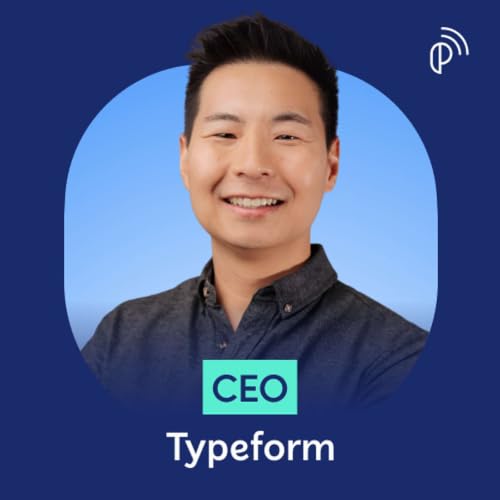
  • Typeform CEO on Why Breadth Beats Depth as an AI Moat and How to Build a Defensive and Offensive AI Strategy | Jay Choi | E301
    Jun 24 2026

    In this episode of The Product Podcast by Product School, Carlos González de Villaumbrosia sits down with Jay Choi, Chief Executive Officer at Typeform. Typeform is the AI engagement platform trusted by more than 150,000 customers, including 95% of the Fortune 500. Before Typeform, Jay spent seven years as Chief Product Officer and General Manager at Qualtrics, where the company scaled from $100M to over $1B in ARR.

    What you'll learn:

    • Breadth of surface area as a stronger AI moat than depth of use case, and why going broad is the right strategic bet right now
    • The dual posture Typeform built: a defensive strategy to make their core product impossible to replicate, and an offensive strategy to expand into full customer workflows
    • Research Flow, their new product that compresses 50 customer interviews from weeks into hours using AI-moderated research
    • Being model-agnostic from day one, and what they learned when switching models without an observability platform in place
    • The pricing experiment framework Jay uses: 30 simulations before a single market goes live

    Key takeaways:

    • When AI threatens to commoditize your core product, expanding surface area is a stronger defense than adding AI features to what you already have
    • Positioning AI capabilities in plain language, not technical terminology, is the difference between adoption and abandonment
    • Happy churners are a product problem, not a marketing problem: the fix is finding structurally always-on use cases.

    Credits:
    Host: Carlos Gonzalez de Villaumbrosia
    Guest: Jay Choi

    Social Links:

    • Find out more about Product School here
    • Follow our Podcast on TikTok here
    • Follow Product School on LinkedIn here


    Show More Show Less
    33 mins
  • Mozilla Head of Firefox on The Future of Agentic Browsers and Fighting for the Open Internet Against Google Chrome, Apple Safari & Microsoft Edge | Ajit Varma | E300
    Jun 17 2026

    For episode 300 of The Product Podcast, Carlos Gonzalez de Villaumbrosia sits down with Ajit Varma, Head of Firefox at Mozilla, the nonprofit behind the original challenger browser that pioneered browser tabs, pop-up blockers, and browser extensions. With 210 million active users and $826 million in annual revenue, Firefox is the only major independent, open-source browser still standing against Google Chrome's 68% share, Apple Safari's 17%, and a new wave of agentic browsers.

    Before Mozilla, Ajit spent six years at Meta leading monetization of WhatsApp and overseeing its business messaging platform. He has also held product roles at Google, Uber, and Square.

    What you'll learn:

    • Why LLMs are making browsers more strategically important, and what that means for product teams building in an agentic world
    • Why "trust us" is no longer enough, and how open source changes the standard for privacy in AI products
    • - How to compete against trillion-dollar incumbents without abandoning your mission


    Key takeaways:

    • Privacy claims without open-source inspectability are unverifiable, "trust us" is no longer a sufficient product strategy in the AI era
    • Competing against trillion-dollar companies is possible when mission clarity defines what you refuse to optimize for
    • The agent-driven internet will either democratize access or concentrate it, product choices made today will determine which

    Social Links:

    • Find out more about Product School here
    • Follow our Podcast on TikTok here
    • Follow Product School on LinkedIn here


    Show More Show Less
    31 mins
  • Linear COO on Rebuilding the Product Development Lifecycle for Teams and Agents — From Issue Tracker to Shared Operating System | Cristina Cordova | E299
    Jun 10 2026

    In this episode of The Product Podcast by Product School, Carlos González de Villaumbrosia sits down with Cristina Cordova, Chief Operating Officer at Linear, the product development system built for teams and agents. Linear raised $82 million in a Series C round in June 2025 at a $1.25 billion valuation. The company has been profitable since 2021, and serves over 20,000 paid business customers, from seed-stage startups to Fortune 100 enterprises, with a team of just 140 people. Before Linear, Cristina joined Stripe as one of its first employees, and led Platform and Partnerships at Notion.

    What you'll learn:

    • Why keeping headcount intentionally lean is a strategic advantage
    • Replacing traditional interviews with paid two to five-day projects
    • Why PMs are the fastest-growing power users of agentic tools


    Key takeaways:

    • A small team is not a small business. Revenue, customers, and growth rate matter more than headcount.
    • If you fully delegate your AI thinking, you lose your native understanding of how these products actually work
    • Agentic workflows are now the default, not a feature. The companies that treat them that way will pull ahead.

    Credits:
    Host: Carlos Gonzalez de Villaumbrosia
    Guest: Cristina Cordova

    Social Links:

    • Find out more about Product School here
    • Follow our Podcast on TikTok here
    • Follow Product School on LinkedIn here


    Show More Show Less
    51 mins
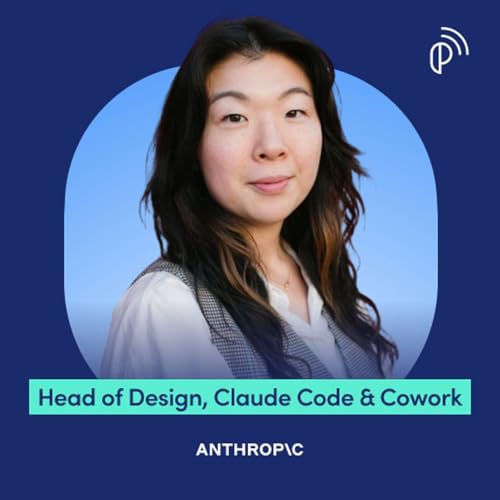
  • Anthropic Head of Design on Claude Code's Evolution from an Internal Feature into the Fastest-Growing Revenue Product in History | Meaghan Choi | E298
    Jun 3 2026

    Anthropic just closed a $65 billion Series H round at a valuation approaching one trillion dollars — and has crossed $30 billion in annualized revenue, driven largely by enterprise demand. Claude Code alone became generally available in May 2025 and reached $2.5 billion in annualized revenue in February 2026, with that figure more than doubling since the beginning of 2026.

    Meaghan Choi, Head of Design for Claude Code and Cowork at Anthropic, was in that room. This conversation goes inside the operating model behind that growth.

    What you'll learn:

    • Claude Code's evolution from an internal feature into one of the fastest-growing revenue products in history
    • Anthropic's secret sauce to shipping products at an incredibly high cadence while ensuring quality
    • How product teams get structured into small pods of 5 AI Builders and a fleet of agents, where non-engineers ship code into production
    • Driving enterprise adoption through PLG from technical teams
    • How organizations can measure AI ROI beyond AI adoption and token usage
    • Designing user interfaces for agentic capabilities, including CLI

    Key takeaways:

    • Titles and role boundaries matter less than contribution. At Anthropic, designers ship code and engineers design, and the pod owns the output collectively.
    • Quality gates have moved downstream. The richest product learnings come from working software, not from reviewing mocks or PRDs.
    • Managing a team now means managing both people and a fleet of AI agents. The skills are more similar than they appear.

    Credits:
    Host: Carlos Gonzalez de Villaumbrosia
    Guest: Meaghan Choi

    Social Links:

    • Find out more about Product School here
    • Follow our Podcast on TikTok here
    • Follow Product School on LinkedIn here


    Show More Show Less
    21 mins
  • The Lean Startup Author on New Book Incorruptible: Why Good Companies Go Bad and How Great Companies Stay Great | Eric Ries | E297
    May 26 2026

    Eric Ries wrote The Lean Startup — a book that has sold over 2 million copies and reshaped how a generation of founders and product teams build products. Fifteen years later, he's back with a new book, Incorruptible, and a harder question: not how to build a great company, but how to keep it that way.

    What you'll learn:

    • Why the forces destroying great companies are structural, not moral — and what that means for how you build
    • How Saul Price built FedMart, and Costco's Jim Sinegal each solved half the problem, and why you need both halves
    • How Anthropic used a purpose trust structure, the Long-Term Benefit Trust, to protect its safety mission from investor pressure
    • Why values on the wall fail and what the Johnson & Johnson asbestos scandal reveals about how incentives quietly overwrite principles
    • How builders at any level of an organization can start influencing governance without a title or authority

    Key takeaways:

    • Success makes you a target: the more valuable your company becomes, the more pressure it faces to betray the mission that made it valuable
    • Ethos is the real moat: the intangible system of principles that makes a company trustworthy is harder to copy than any product or contract
    • Governance is not a legal formality; it is the active, ongoing practice of protecting what you built from the forces that will try to extract it

    Credits:
    Host: Carlos Gonzalez de Villaumbrosia
    Guest: Eric Ries

    Social Links:

    • Find out more about Product School here
    • Follow our Podcast on TikTok here
    • Follow Product School on LinkedIn here


    Show More Show Less
    55 mins
  • Snowflake VP of AI on Why Enterprises Hide Behind Governance to Avoid Real AI Transformation | Baris Gultekin | E296
    May 13 2026

    Snowflake is the AI Data Cloud behind some of the world's largest enterprises — $4.68 billion in annual revenue, 29% year-over-year growth, and over 760 Forbes Global 2000 companies as customers. Baris Gultekin, VP of AI at Snowflake, leads the product efforts that sit at the center of how those enterprises actually operationalize AI. Before Snowflake, he co-founded Google Assistant and scaled it from 10 million to 500 million monthly users.

    What you'll learn:

    • Why our data isn't clean enough is a delay tactic — and the scoped approach to move past it
    • What the semantic layer is and how it lets AI answer business questions accurately, not just fluently
    • Why running AI next to data (instead of sending data to models) makes governance dramatically easier
    • How Snowflake deployed AI internally: a CEO-level non-optional mandate combined with bottom-up access to their own Cortex coding agent
    • Why context — not just data — is what agents need to operate reliably at enterprise scale

    Key takeaways:

    • Start with one scoped use case, build the semantic model around it, layer governance — don't wait for perfect data
    • Context is a shared reality for agents: unified data + business semantics + codified workflows
    • AI adoption compounds when leadership sets a hard mandate and simultaneously gives everyone a tool to experiment with

    Credits:
    Host: Carlos Gonzalez de Villaumbrosia
    Guest: Baris Gultekin

    Social Links:

    • Find out more about Product School here
    • Follow our Podcast on TikTok here
    • Follow Product School on LinkedIn here


    Show More Show Less
    27 mins