Episodes

  • Workplace Investigations: 6 Steps to a Defensible Process
    Apr 21 2026
    Conducting a workplace investigation is about much more than finding someone guilty. To protect your organization, you need a defensible, neutral process that can withstand the scrutiny of a courtroom or an arbitrator. In this episode, Bob Stenhouse from Veritas Solutions joins me to break down the six essential components of a high-standard workplace investigation. We explore how to handle initiating events (including social media triggers), the nuances of gathering sufficient evidence without a "smoking gun," and the legal standard of the balance of probabilities. Whether you are dealing with a formal complaint or a high-risk harassment allegation, these insights will help you ensure your investigative findings are objective and legally sound. 00:00 The goal of neutral workplace investigations 01:04 Six components of every investigation 04:15 Can the news trigger an investigation? 06:06 Harassment vs. bullying: the legal difference 07:36 Using a risk-informed approach for complaints 11:12 When is your evidence actually sufficient? 14:59 Explaining the balance of probabilities standard 17:32 What makes a solid investigation report? 20:07 Aggravating vs. mitigating factors in discipline 21:42 When to hire an external investigator Find Bob Website: https://veritassolutions.net/ LinkedIn: https://www.linkedin.com/in/bobstenhouse/ Find Andrea (me) Website: https://thehrhub.ca/ LinkedIn: https://www.linkedin.com/in/andrea-adams1/
    Show More Show Less
    24 mins
  • Pay Transparency 2026: What HR Needs to Know
    Apr 14 2026
    Pay transparency is no longer just a "nice to have" feature for job postings: in many provinces and states, it is now a legal requirement. It's not enough to add the numbers to a posting - consider what your other employees will think when it shows up on a posting for a job similar to theirs and - wow! - it's more than they are paid! This shift will force an overhaul of internal compensation structures. In this episode, I speak with Sean Raible, founder of Game Plan Total Rewards, to break down the actual work required to stay compliant without totally eroding trust. We discuss: - The layers of legislation across BC, Ontario, and the US. - The 5-step framework for implementing a transparent pay program. - How to handle "compression" when new hires expect more than current staff. - Why 'crawl, walk, run' is a good approach to this work - The surprising impact transparency has on applicant volume. 00:00 The reality of pay transparency laws 01:10 The implications of 2026 deadlines 02:35 Building a compensation philosophy from scratch 04:10 Why pay discussions trigger high emotion 05:30 Regional nuances 07:10 More on the variation between jurisdictions 09:15 How transparency increases applicant resumes 10:45 Five steps to implement transparency 13:10 Sustaining your compensation program long-term 16:30 Avoiding the "New Hire" pay trap 18:50 Timeline: How long implementation takes 21:50 Managing high-salary demands from candidates **Find Sean Raible** Website: https://gameplantotalrewards.ca/ LinkedIn: https://www.linkedin.com/in/seanraible/ **Find Andrea Adams (me)** Website: https://thehrhub.ca/ LinkedIn: https://www.linkedin.com/in/andrea-adams1/
    Show More Show Less
    26 mins
  • The Myth of Organic Company Culture
    Apr 9 2026
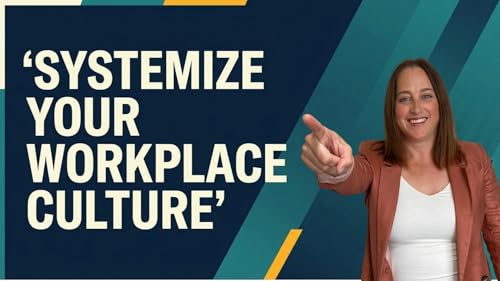
    Company culture is ignored too often as a focused activity of HR. And it's rare to find someone who has a system for intentionally shaping culture. Nadia Uberoi, Head of People at Garner Health, is that person. She argues that shaping culture is one of, if not the most important activity we do in HR. In this episode, we break down: 🤷🏻‍♀️The difference between organic and intentional company culture. 3️⃣ Nadia’s three-part framework for systemizing culture: Expectations, Mechanisms, and Enablement. ❗️ And a bonus: How to build a "high candour" environment where thoughtful feedback is a requirement, not an option. 🤔 Practical ways to assess if your team is actually living your values. 00:00 Intro 01:36 Why culture is the foundation of HR 02:30 What it means to systemize culture 03:25 The three-part culture framework explained 04:13 Defining cultural competencies and expectations 06:14 Designing mechanisms into the flow of work 08:52 Training and enabling your people 11:21 Using real case studies for onboarding 12:25 How to accurately assess culture 15:33 The truth about feedback and mindset 17:48 Candour with decency **Find Nadia** Website: https://www.getgarner.com/ LinkedIn: https://www.linkedin.com/in/nadia-uberoi/ **Find Andrea (me)** Website: https://thehrhub.ca/ LinkedIn: https://www.linkedin.com/in/andrea-adams1/
    Show More Show Less
    20 mins
  • [SMB Essentials] Handling Employee Complaints - The Draining Kind
    Mar 31 2026
    Managing employee complaints in a small business can quickly become a demanding role that drains your decision-making energy. If you find yourself frustrated by constant venting about co-workers or office lighting, it is a signal that you may need to shift how you respond to complaints. In this episode, I break down how to differentiate between complaints that require your intervention and those that serve as coaching opportunities for your team. I explore the importance of written policies for predictability, how to handle feedback regarding your managers, and the specific questions you can ask to return responsibility to your employees. Running a productive business does not mean an environment free of friction, but it does require helping your people navigate that friction themselves.00:00 Managing normal complaints01:10 Why frequent complaints wear you out02:02 Balancing policy and nimbleness03:22 Deciding when to get involved04:38 Respecting employees through their own problem-solving05:30 Handling complaints about your managers07:08 Using coaching questions instead of fixing08:44 Calibrating realistic workplace expectations10:06 Support for small and medium businesses**Find Andrea (me)**Website: https://thehrhub.ca/LinkedIn: https://www.linkedin.com/in/andrea-adams1/Email: andrea@thehrhub.ca
    Show More Show Less
    11 mins
  • Hiring - An Evidence-Based Approach (w. Dr. Nita Chhinzer)
    Mar 24 2026
    Stop hiring for the wrong things. When you hire, are you actually screening for success, or just a polished resume and a good interview that ticks the experience and credentials boxes? In this episode, I sit down with Dr. Nita Chhinzer (University of Guelph) who challenged my perspective on recruitment. And as a bonus, what's happening in the market.It turns out, most of us are looking at the wrong things and asking the wrong questions. While technical skills get someone through the door, the evidence indicates that three "hidden" traits actually predict long-term performance: 1. Professional Maturity: Can they handle the sometimes unspoken realities of work?2. Attitude (The Useful Kind): Do they have genuine ownership, are they resilient, or are they just clocking in?3. Feedback Receptivity: Can they hear feedback without becoming defensive? Then will they actually use it to improve? Because if they can't take feedback, they won't grow as much.Ad despite what your client says they want, these three qualities are what they actually want according to the evidence and research. Once the basic skills pass a screening.So what soft skills do you include in your screening? Leave a comment. Has a "great on paper" hire ever failed because they lacked one of these three? *Find Dr. Nita Chhinzer in the following places* LinkedIn: https://www.linkedin.com/in/nitachhinzer/https://nitachhinzer.com/https://www.uoguelph.ca/lang/people/nita-chhinzer*Find Andrea Adams in the following places*https://www.linkedin.com/in/andrea-adams1/https://thehrhub.ca/
    Show More Show Less
    23 mins
  • Emotional Labour in HR (w. Dina Denham Smith)
    Mar 17 2026
    Emotional labour is the unwritten work of managing your feelings and the emotions of others to be effective in the workplace. HR professionals and leaders often act as "toxin handlers," absorbing organizational frustrations and conflicts without a formal strategy for recovery. In this episode, executive coach and author Dina Denham Smith breaks down why emotional labour feels like pushing a beach ball underwater and how to prevent it from leading to compassion fatigue. We explore the difference between emotional and cognitive empathy, the physical toll of suppressing true feelings, and practical ways to "metabolize" the stress of leadership. Key takeaways include: - The definition of a "toxin handler" and why this role is vital yet undervalued. - The three components of an emotion: behavior, physiology, and mental interpretation.- How to use the "Three Rs" (Reflect, Reframe, Restore) to recover your energy. - Why cognitive empathy is a protective strategy for those in high-conflict roles. **Find Dina Denham-Smith** Website: https://dinadenhamsmith.com/ LinkedIn: https://www.linkedin.com/in/dinadenhamsmith/ Book Titles or other links: Emotionally Charged: How to Lead in the New World of Work **Find Andrea (me)** Website: https://thehrhub.ca/ LinkedIn: https://www.linkedin.com/in/andrea-adams1/
    Show More Show Less
    29 mins
  • [SMB Essentials] How to handle employee complaints - the LEGAL kind
    Mar 10 2026
    Complaints from employees can be intimidating for any leader, but especially in an SMB where you don't have HR or anyone in HR with this kind of depth. This episode breaks down the immediate steps you must take when an employee brings forward an alarming complaint to avoid legal issues and protect your organization. You need to know which kinds of complaints come with legal obligations and which don't and then how to avoid making the situation worse. Key Takeaways: 5️⃣ 5 steps during the initial complaint meeting. 🇨🇦 vs 🇺🇸: Key differences between Canada and the US around which complaints trigger your obligation to investigate 🤔 How to determine if you can handle an investigation internally or if you must hire an outside expert. 🙅🏻‍♀️ Common mistakes leaders make, including "gut-feeling" decisions and mediation traps. 00:00 Five steps for the initial meeting 01:25 Categorizing the three types of complaints 04:00 US vs. Canada: Legal trigger words 05:18 When you are obligated to investigate 08:40 Formal vs. informal complaint triggers 09:30 Internal vs. external investigator criteria 12:45 Advice for self-led investigations 13:40 Common mistakes to avoid **Find Andrea (me)** Email: andrea@thehrhub.ca Website: https://thehrhub.ca/ LinkedIn: https://www.linkedin.com/in/andrea-adams1/
    Show More Show Less
    16 mins
  • People First Culture - How Caring for Employees is a Performance Multiplier (w. Josh Block)
    Mar 3 2026
    Building a people first culture is an aspiration for many in HR and leadership. But we struggle to close the gap between our good intentions and the actual impact on people. In this conversation, Josh Block, President of Block Imaging and author of People Matter at Work, explains why caring is a legitimate business strategy that drives ownership and long term performance. So that our people FEEL that we care. We discuss the "Three T’s" of leadership, the difference between viewing employees as resources to be extracted versus a garden to be nurtured, and the specific questions we can coach leaders to ask so they build real trust. If you are looking to move beyond transactional management (where people are the gold mine) and create an environment where employees feel safe, seen, and successful, this episode provides practical advice for HR and leaders. **Find Josh Block** Website: https://www.peoplematteratwork.com/ LinkedIn: https://www.linkedin.com/in/joshuablock/ Book: https://www.amazon.ca/People-Matter-Work-Fostering-Everyone/dp/B0FYX543SN **Find Andrea (me)** Website: https://thehrhub.ca/ LinkedIn: https://www.linkedin.com/in/andrea-adams1/
    Show More Show Less
    20 mins