Episodes

  • Charli Brewer Was Born to Rock
    Jun 5 2026

    Charli Brewer Was Born to Rock

    Charli Brewer didn’t casually pick up the guitar. Once it clicked, it became a daily obsession.

    A SoCal guitarist, multi-instrumentalist and singer-songwriter, Charli has built a large and engaged online following through rock and metal guitar solo covers, performing with the kind of energy that makes it clear she is not just playing the notes. She is living inside them.

    In this episode of SoCal Soundcheck, Charli talks about growing up surrounded by music, from Jerry Lee Lewis and The Beatles to Black Sabbath, Led Zeppelin, Van Halen, Megadeth, Metallica, Motörhead, System of a Down and Pink Floyd. She shares how a dusty, out-of-tune guitar with old strings eventually became the instrument that pulled her in for hours a day, every day.

    Charli also breaks down how she studies guitar players, why she often goes beyond tabs and tutorials, how live performances help her understand a guitarist’s feel, and why learning songs by ear can be so satisfying.

    The conversation also gets into her gear, including Jackson King V guitars, EMG pickups, Floyd Rose systems, her Gibson Les Paul, Blackstar amps, her Boss GT-1000 setup, and the artist relationships she has built with Blackstar Amplification and EMG. Charli talks about becoming a Blackstar Amplification artist, being endorsed by EMG, playing NAMM, and how tone, feel and versatility shape the way she plays.

    Beyond the guitar talk, Charli opens up about building her Instagram audience, staying consistent, engaging with fans around the world, and treating social media as a modern version of the gig: every post is a chance for someone to stop, listen and connect.

    She also shares where she wants to go next: original music, a real band, collaboration, gigging, and eventually releasing a catalog of songs she has been writing for years.

    In this episode, we talk about:

    • Growing up as a SoCal musician with Texas blues influence
    • The Beatles “light bulb” moment
    • Discovering Sabbath, Zeppelin, Van Halen, Megadeth, Metallica and System of a Down
    • The old guitar, dead strings and System of a Down song that pulled her back in
    • Learning guitar through YouTube, tabs, live videos and ear training
    • Why Charli studies guitarists instead of just copying solos
    • Practicing three to four hours a day
    • Guitar as therapy, outlet and creative fuel
    • Jackson King V guitars, EMG pickups, Floyd Rose systems and her Gibson Les Paul
    • Becoming a Blackstar Amplification artist
    • Being endorsed by EMG
    • Playing NAMM and connecting with the music gear community
    • Using Instagram to build a worldwide guitar audience
    • Why consistency, authenticity and engagement matter
    • Her unreleased original music and future band plans
    • Why she wants collaboration, chemistry and a real band behind her next chapter

    Follow Charlie on Instagram: https://www.instagram.com/charli_b_music/

    Follow Charlie on YouTube: https://www.youtube.com/@CharliBrewerMusic

    SoCal Soundcheck proudly sponsored by Tsunami Cables

    Tsunami Cables are built for musicians who care about clean signal transfer, lower noise, reliable tone, and gear that can handle real wear and tear gig after gig.

    They’re made by musicians, for musicians, proudly built in SoCal, and backed by a lifetime warranty.

    Visit TsunamiCables.com and use promo code SOCALSOUND for 10% off.

    Show More Show Less
    1 hr
  • Keith Stickney of Tsunami Cables Talks Tone, Reliable Gear, and Why It’s Important to Be Nice
    May 30 2026

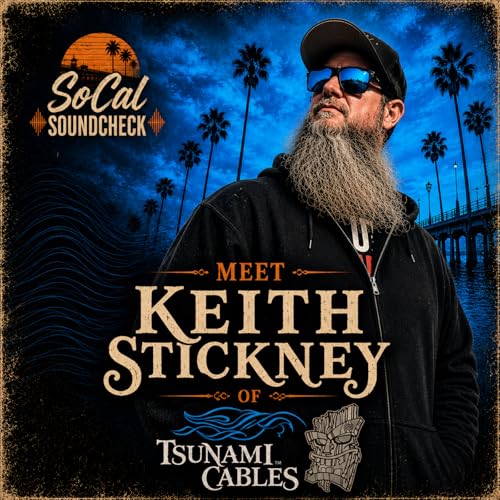
    Keith Stickney of Tsunami Cables joins SoCal Soundcheck for a conversation about tone, reliable gear, musicianship, and why being easy to work with still matters.

    Keith is the owner of Tsunami Cables, a drummer, and a longtime audio/video professional. His story starts with music. From learning drums in middle school to marching band, gigging around San Diego, studying at Musicians Institute, and working in recording and live sound, Keith has spent decades on both sides of the stage.

    In this episode, we talk about how his background as a drummer shaped the way he hears music. Keith breaks down pocket, groove, dynamics, tasteful playing, and why a drummer’s real job is not just playing fills, but making the entire band feel comfortable and locked in. As he puts it, one of the best compliments a drummer can get is, “You made it easy for me to play.”

    From there, the conversation turns to the gear most musicians use every gig but rarely think about: cables.

    Keith explains how Tsunami Cables started while he was learning to solder and repair cables at Musicians Institute. What began as a side hustle selling handmade cables to other musicians eventually became a company built around a simple idea: musicians should not have to choose between studio-quality tone and road-ready durability.

    We get into what separates a cheap cable from a high-quality cable, how cables can affect tone, why bad cables can make your rig sound muffled, what braided shielding does, why cable memory happens, and how wrapping your cables the right way can help protect them. Keith also explains why reliability is not just a convenience. For working musicians playing wineries, churches, clubs, corporate events, and festivals, unreliable gear can hurt the show, the client experience, and whether you get called back.

    But this episode is not just about cables. It is also about community.

    Keith talks about the Tsunami Family, his artist program, and why he values real relationships over chasing big names. For him, supporting artists is not just about getting a product into someone’s rig. It is about working with people he respects, musicians he can grab coffee or a beer with, and players he genuinely wants to see succeed.

    We also talk about custom cables, the Tsunami Custom Shop, the upcoming V15 tube preamp, and Keith’s biggest hill to die on when it comes to music, sound, and gear: attitude matters. Gear can be fixed. Cables can be replaced. But being kind, prepared, and easy to work with can open doors that talent alone cannot.

    Follow Tsunami Cables on Instagram: https://www.instagram.com/tsunamicables/

    SoCal Soundcheck is proudly sponsored by Tsunami Cables.

    Great tone starts with great gear, and great gear has to be reliable. Whether you’re on stage, in the studio, or setting up for a podcast, your cables are the last thing you want to worry about.

    That’s why SoCal Soundcheck is proud to be sponsored by Tsunami Cables. These are high-quality, dependable cables built for working musicians, serious players, and anyone who values gear that performs night after night. When your signal matters, your cable matters.

    Use promo code SOCALSOUND at checkout for 10% off your order at TsunamiCables.com.

    Offer valid through May 29, 2027.

    Show More Show Less
    1 hr and 8 mins
  • Hunter Webb of RoseLine Band on Bass, Groove & the Temecula Music Scene
    May 23 2026

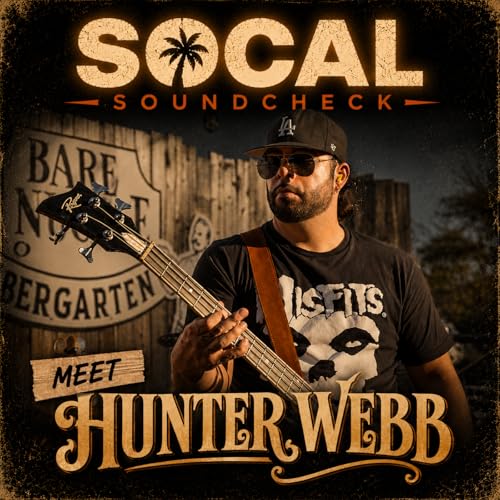
    In this episode of SoCal Soundcheck, Brian sits down with Hunter Webb, bassist for Rose Line Band, to talk about his musical roots, growing up around music, discovering bass, and finding his place in the Southern California live music scene.

    Hunter shares how moving to Murrieta helped spark his musical journey, why bass lines from artists like Paul McCartney, John Entwistle, Jack Bruce, Cliff Burton, and Geddy Lee shaped his style, and what makes a great rhythm section work.

    The conversation also dives into the story of RoseLine Band, how the group came together through the local open mic scene, the role Somerset Winery played in their formation, favorite songs from their setlist, gear, tone, karaoke go-tos, and why the Temecula music community continues to mean so much.

    Follow RoseLine Band on Instagram: https://www.instagram.com/rose_line_band/

    Show More Show Less
    43 mins
  • Kyle Hudson of Those Guys on Becoming One of SoCal’s Favorite Local Bands Band
    May 20 2026

    Kyle Hudson, lead singer and guitarist of Those Guys, joins SoCal Soundcheck for a fun, wide-ranging conversation about growing up in Murrieta, learning guitar, starting out at open mics, and accidentally building one of the Temecula Valley’s most entertaining live bands.

    Kyle shares how School of Rock inspired him to pick up guitar, how Those Guys came together for a one-off St. Patrick’s Day show at The Cove, and how that single gig snowballed into a packed local calendar.

    The conversation also digs into what makes a great cover band work. Kyle talks about choosing songs that fit the band, why performance matters more than simply picking popular songs, and why some crowd favorites become permanent setlist staples while others disappear after a few tries. Brian and Kyle also talk about Bailey’s, The Cove, Old Town Temecula, live music noise issues, Rage Against the Machine closers, dirt bikes, gaming, and the community that keeps the local music scene alive.

    Topics covered:

    • Kyle’s Murrieta roots and musical family
    • Learning guitar after watching School of Rock
    • Starting out with open mics and original bands
    • How Those Guys began as a one-off St. Patrick’s Day gig
    • The Cove, Bailey’s, Wine and Beer Garden, and the local venue circuit
    • Why cover bands need to read the room
    • Song selection versus song performance
    • Why “Play That Funky Music,” “Mr. Brightside,” and Rage Against the Machine work live
    • The story behind Those Guys’ original song “Rain Lucky”
    • Old Town Temecula’s live music and noise ordinance challenges
    • Dirt bikes, injuries, gaming, and Kyle’s offstage personality

    Follow Kyle on Instagram: https://www.instagram.com/kvlehudson/

    Those Guys on Instagram: https://www.instagram.com/thoseguysbanned/

    Those Guys Website: https://thoseguysbanned.com/

    Sponsored by Tsunami Cables

    SoCal Soundcheck is proud to be sponsored by Tsunami Cables. Use promo code SOCALSOUND at checkout for 10% off your order at TsunamiCables.com.

    Offer valid through May 29, 2027.

    Show More Show Less
    1 hr and 7 mins
  • Woody Garcia on Chasing Tone, Reading the Room & Bringing People Together Through Live Music
    May 15 2026

    “The goal is to make people feel something.”

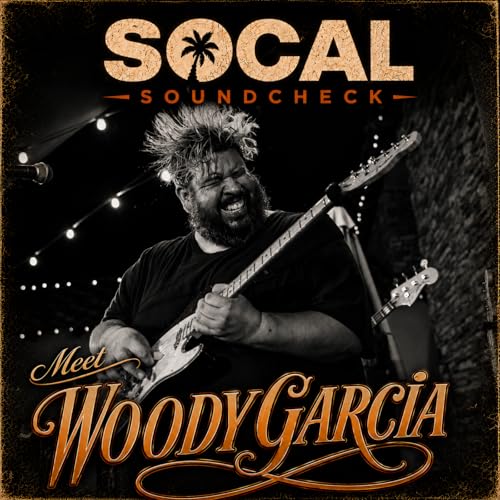
    On this episode of SoCal Soundcheck, Brian sits down with longtime Southern California musician Woody Garcia, frontman of Woody and the Harrelsons, for a conversation about the long road from childhood guitar lessons to becoming one of the most recognizable live performers in the local music scene.

    Woody traces his story back to growing up in San Dimas, learning guitar around age 11 or 12, and being shaped by the music of Nirvana, Pearl Jam, Smashing Pumpkins, Stone Temple Pilots, and the alternative explosion of the ’90s. He talks about early bands, reconnecting with childhood friend Eugene at a Save Ferris show, recording original music, playing punk shows with Cry Havoc, and eventually finding his way into the project that would become Woody and the Harrelsons.

    What started as a leap into playing covers became something deeper. Woody shares how performing songs people already love taught him to see music as an emotional bridge -something tied to memory, people, and moments in our lives. For him, doing those songs justice is part of the responsibility.

    The conversation also gets deep into the craft of live performance: reading the room, choosing songs in the moment, building a set without a setlist, and learning how to serve both the crowd and the venue. Woody explains why the band evolved from mostly ’90s rock into a broader mix of ’80s alternative, classic rock, hip-hop, R&B, soul, and funk - and why the goal is never to give people the exact same show twice.

    Of course, there is plenty of guitar talk. Woody breaks down his Friedman Small Box amp, his his journey through guitars, amps and various pedals, the role of his hot pink gear aesthetic, string gauge, picks, and why an unforgiving amp can make you a better player. He also talks about the influence of David Gilmour, Prince, Radiohead, and how the musicians in his band are his biggest inspiration.

    But the heart of this episode is bigger than gear. Woody opens up about taking better care of himself, learning how to sustain the physical demands of singing and performing for hours at a time, and trying to be his best self so the band can be its best self. Toward the end of the conversation, he reflects on seeing how music brings people together, helping people tune out the noise of the world for a moment, and remind us that we are more alike than we are different.

    This is a conversation about guitars, gear, cover songs, and the grind - but even more than that, it’s about connection, presence, gratitude, and the kind of musician who wants every show to mean something.

    Listen to this episode if you’re into: Southern California live music, guitar tone, cover bands, ’90s rock, Pink Floyd, Prince, Radiohead, local music stories, and honest conversations with working musicians.

    Woody & The Harrelson's Website: https://www.woodyandtheharrelsons.com/

    Woody on Instagram: https://www.instagram.com/woodyandtheharrelsons/

    Sponsored by Tsunami Cables

    SoCal Soundcheck is proud to be sponsored by Tsunami Cables. Use promo code SOCALSOUND at checkout for 10% off your order at TsunamiCables.com.

    Offer valid through May 29, 2027.

    Show More Show Less
    1 hr and 38 mins
  • Meet Tristan Bowls: From Guitar Hero to East Lake Studios
    May 10 2026

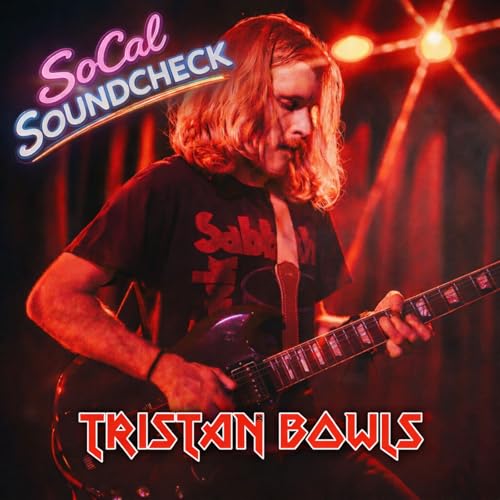
    Tristan Bowls picked up the guitar at 11 because Guitar Hero 2 and 3 made him want to play a real one. AC/DC, Guns N' Roses, Iron Maiden, Slash. That was the foundation.

    Now he's 29, runs Eastlake Studios on a private property in Lake Elsinore, plays guitar in Eastlake Rhythm Section, and tests amps at Suhr during the day.

    In this episode, Tristan and Brian get into:

    - Learning guitar by jamming with neighbors and best friends down the street

    - The hard rock and heavy metal foundation that started everything (AC/DC, Iron Maiden, Guns N' Roses, King Diamond)

    - Branching into jazz fusion, R&B, and funk in college and beyond

    - How Eastlake Studios came to be: getting invited to jam there in 2021 after COVID, finding the studio empty, and revamping it into his own space

    - Why he prefers being behind the console listening, rather than recording himself

    - Recording Hypno Sapo live at Eastlake and what made the band's theory knowledge stand out

    - His mic setup for guitar cabinets: Sennheiser 421 paired with an SM57

    - Why a Warm Audio U47 clone became his go-to vocal mic

    - Working volume and tone knobs on the guitar instead of just relying on pedals

    - His current rig: a Suhr Bella head, a Fender Princeton, and an Engl head he's borrowing for a punk project

    - His pedalboard: Polytune, Vertex boost, Cornerstone Gladio overdrive, Boss delay, Strymon Flint

    - Why he sold his SG Standard to pay for his Suhr Tele-style guitar

    - The Eastlake Rhythm Section origin story: 14 years of friendship and multiple bands before landing in one project in 2021

    - Why playing covers your own way matters more than copy-pasting the original

    Memorable moments from the episode:

    When Brian asked if Tristan ever pushes back on a band's tone in the studio: "If I'm really hearing something, I don't have a problem with being like, hey, can you turn down your treble on your amp? Because I'd rather do it that way than have to go and do it after I've recorded it."

    On why comfort in the studio matters: "If you're nervous when you're recording, it's never going to come out like how you want it to. You could listen back to it. It could be good, but there's going to be little things where you're like, oh, that could have been better."

    On guitar tone, sharing something a mentor told him early on: "You can control a lot of the tone just through your volume, your tone knob."

    On how Eastlake Rhythm Section approaches covers: "We're going to play what we want to play. And we're going to play it good enough or just tight to where people are like, yeah, that's good."

    Where to find Tristan and Eastlake Studios:

    Eastlake Studios: recording, mixing, rehearsal space, music and video production. See Eastlake's and Tristan's credited work: https://linktr.ee/eastlakestudios

    - East Lake Studio Instagram: https://www.instagram.com/eastlake_studios_/

    - East Lake Rhythm Section Instagram: https://www.instagram.com/eastlake_rhythmsection/

    - Personal Instagram: https://www.instagram.com/tristan_bowls/

    Sponsored by Tsunami Cables

    SoCal Soundcheck is proud to be sponsored by Tsunami Cables. Use promo code SOCALSOUND at checkout for 10% off your order at TsunamiCables.com.

    Offer valid through May 29, 2027.

    Show More Show Less
    1 hr and 13 mins
  • Meet Lex Borja: From Mariachi Roots to Performing on The Voice
    May 8 2026

    Lex Borja's musical roots run four generations deep. His great-grandfather was a trumpet player. His grandmother was a singer who directed a 12-piece mariachi, and once stopped them mid-song to correct the key (an 8-year-old Lex was watching front row). His mother is also a singer with a strong voice.

    Lex started playing guitar at 8, started singing at 14, and has been playing venues since he was 18. He's 41 now and leads a band called Lextacy.

    In this episode, Lex and Brian get into:

    - Growing up in Tijuana with three-day family parties where everyone sang or played an instrument

    - Being immersed in 90s pop and R&B (Boyz II Men, Mariah Carey, Luis Miguel) alongside mariachi

    - Auditioning for La Academia in Mexico (2010), American Idol (2011, made it to Hollywood Week and the top 50), and The Voice Mexico (4 episodes on national TV, coached by Wisin y Yandel)

    - The chair-turn moment on The Voice Mexico, when his hands cramped from the electricity and he had to stop playing guitar mid-song

    - Auditioning for nine years before getting on The Voice

    - Why he chose to sing in Spanish on The Voice (English is his second language, and he felt he could be more sincere transmitting emotion in Spanish)

    - The story of being booked to perform on opening night of New York Fashion Week (Runway 7), and how it started with a song he wrote called "Never Thought" four months earlier

    - Auditioning for The Voice in LA in 2022 and getting blocked due to being on probation

    - How Lextacy can grow up to a 9-piece band when the venue can afford the full lineup

    - The songwriting practice of mumbling first, logic second (a technique he learned from the Beatles)

    - His three tests for new mixes: phone test, shitty wireless speaker, and car test

    - How writing songs became his way to say what he couldn't say out loud, traced back to his single mom leaving letters on his pillow

    - Why you can't blindly trust the setlist, and how to read the room

    - His new single "Dañado" (releasing May 29) and what damaged means to him

    Memorable moments from the episode:

    When Lex talks about transforming pre-show panic into something useful, he says: "If you don't control your nerves, your nerves will eat you up and just leave you stranded to dry."

    Reflecting on what kept him going through 9 years of auditions and a probation block that cost him a spot on The Voice in LA, Lex shares the philosophy that drives him: "I don't want the what-if on my life."

    Toward the end of the conversation, Lex makes a direct appeal to anyone holding back a song they're scared to release: "Don't be stingy. Share that shit. Because I guarantee you that whatever you're going through, there's someone else out there going through a similar situation that that song could potentially shine some light, perspective, or lift someone up."

    And on his core identity as an artist, when asked about playing alongside skilled guitarists: "I'm a singer. I'll go toe to toe with any singer. Put me. Let's go, baby. And I don't care if I get crushed, but I'll hold my ground."

    Where to find Lex:

    - New single "Dañado" releasing Friday, May 29 on Spotify, Apple Music, Amazon Music, Deezer, and other major platforms

    - Live release performance: Saturday, May 30 at Miramonte Winery, performing the song live for the first time with the band

    - Lex has approximately 17 songs on Spotify, with multiple songs around the 50K stream mark (many listeners are coming from outside the US, including Spain, France, Brazil, and Mexico)

    Lextacy band members shouted out in this episode: Josh Lomeli (guitar), Cody Burson (bass), Miguel Diaz (drums), Nicolai Flores (trombone), Music Man Mark (trumpet), Cameron Evans, Kole Weber (saxophone), and Dave DeNuccio (percussion).

    Show More Show Less
    1 hr and 10 mins
  • Rick Hildebrandt on Why a Gig Is a Partnership, Not a Performance
    May 6 2026

    Rick Hildebrandt has been gigging in Southern California since 2011, when he traded 54 years of upstate New York for a place in Menifee. After retiring from an IT career at Loma Linda Hospital in 2018, music became the full-time job. Today he plays solo, performs as half of the K-Ray Acoustic Duo with Kelly Ray, and hosts two open mics: Thursdays at The Hive and the second and fourth Tuesdays at Ronis West in Murrieta.

    In this episode, Rick walks through the philosophy behind his approach (he treats every gig as a partnership with the venue, not a performance), the gear and software that lets one guy sound like a full band, and the song-selection formula he's used to keep dance floors full at Lorimar Winery, Stone Church Brewing, and Lady R Bistro. We also get into his influences (Allman Brothers, Brian Setzer, Albert Lee), his Telecaster setup, and why he hasn't brought an amp to a gig in years.

    What we cover:

    • Rick's path from upstate New York to Menifee, and 35 years playing with his brother in law
    • Why he picked up the guitar at 12, and the influence of his mother's sight-reading piano
    • First electric: a Gretsch country gentleman bought after selling a 1972 Bultaco Pursang motocross bike
    • Today's rig: Telecaster, Boss GT-1000, no amp on stage, plus the custom 5-way switch Tele he's currently building
    • How he builds backing tracks in Studio One from MIDI files, tailored to a consistent band sound
    • The 4-fast, 1-slow song formula (and why "B-side" deep cuts don't fill dance floors)
    • Why he plays three hours straight with no breaks
    • The K-Ray Acoustic Duo with Kelly Ray, and why finding a singer with an ear for harmony is harder than it sounds
    • The mindset shift that changed his career: musicians as partners in the venue's business
    • Open mic logistics, including the on-screen queue system Rick's wife runs
    • Influences, slide technique (metal Dunlop, pinky finger), and why he's on 10-46 strings

    Where to find Rick:

    • Website: rickhildebrandt.com
    • Open Mic at The Hive: Thursdays, 7 to 10 PM
    • Open Mic at Roney's West (Murrieta): 2nd and 4th Tuesdays, 6 to 9 PM
    • Upcoming: Lorimar Winery (Wednesday, 12:30 to 3:30) and Wilson Creek Winery for Mother's Day with Kelly Rae (Sunday, 1 to 4 PM)
    • Instagram: https://www.instagram.com/rick_hildebrandt/
    • Facebook: https://www.facebook.com/rick.hildebrandt.9
    Show More Show Less
    42 mins