• Your DNA is changing all the time. Here’s why
    Jun 9 2026
    We tend to think of the DNA strands that contain our genetic code as consistent, stable units. But in reality, the cells that make up our bodies are constantly replicating and changing. Even as you read this sentence, in fact, the genes within your cells are mutating. So, what causes these mutations and what’s the impact? Science writer Roxanne Khamsi examines the answers in her new book, Beyond Inheritance. Today on the show, she gets into how scientists examine these mutations, how they’ve shifted our understanding of disease and what the future of genetic therapy could entail.

    Interested in more biological and life sciences? Email us your question at shortwave@npr.org.

    Listen to every episode of Short Wave sponsor-free and support our work at NPR by signing up for Short Wave+ at plus.npr.org/shortwave.

    See pcm.adswizz.com for information about our collection and use of personal data for sponsorship and to manage your podcast sponsorship preferences.

    NPR Privacy Policy
    Show More Show Less
    14 mins
  • Inner monologues are still a mystery
    Jun 8 2026
    Emily Kwong is pretty sure she lacks an inner monologue, while the inner monologue of producer Rachel Carlson won’t stop chatting. But how well can a person know their inner self? And what does science have to say about it? We dig in in this encore episode of Short Wave.

    To learn more about Charles Fernyhough’s research on voice hearing, visit the project website.

    If you liked this episode, check out our episode on when your brain is actually an "adult."

    Interested in more science inside your brain? Email us your question at shortwave@npr.org.

    Listen to every episode of Short Wave sponsor-free and support our work at NPR by signing up for Short Wave+ at plus.npr.org/shortwave.

    See pcm.adswizz.com for information about our collection and use of personal data for sponsorship and to manage your podcast sponsorship preferences.

    NPR Privacy Policy
    Show More Show Less
    14 mins
  • Prepare to be baffled by what we don't know about eels
    Jun 5 2026
    More than a century ago, all that people knew about European eels was that they lived in the rivers and streams for decades — until they swam out to the ocean and never returned. Eventually, tiny eels would show up and the cycle would start again. Where did the adult eels go? Where did the baby eels come from? Did they even reproduce at all or just spontaneously emerge into being? Science now has some — but not all — of the answers to these questions. Today on the show, Regina G. Barber talks to fish physiologist Arjan Palstra about this mystery and how close scientists are to solving it.

    If you liked this episode, check out our episode on the Pacific lamprey.

    Interested in more science mysteries? Email us your question at shortwave@npr.org.

    Listen to every episode of Short Wave sponsor-free and support our work at NPR by signing up for Short Wave+ at plus.npr.org/shortwave.

    See pcm.adswizz.com for information about our collection and use of personal data for sponsorship and to manage your podcast sponsorship preferences.

    NPR Privacy Policy
    Show More Show Less
    14 mins
  • This common garden plant summons wasps as bodyguards
    Jun 3 2026
    In our latest science news roundup: how nature adapts, for better or worse.

    When faced with pests, plants may not be able to run away – but that doesn’t mean they’re defenseless. Some have thorns or spines, others have poisonous leaves or berries, and still others have…elaborate chemical defense alarm systems? In a recent study, researchers discovered that the common bean plant, P. vulgaris, has a particularly innovative response to hungry caterpillars: a compound in the caterpillar's spit causes the plants to release a chemical signal that attracts wasps. Those wasps then eat the caterpillars or lay eggs in their bodies, effectively removing the threat. Today on the show, we’re diving into plant science and a round of other new scientific studies with All Things Considered host Sacha Pfeiffer.

    If you're interested in the fibermaxxing episode Han mentioned, check it out here.

    Listen to every episode of Short Wave sponsor-free and support our work at NPR by signing up for Short Wave+ at plus.npr.org/shortwave.

    See pcm.adswizz.com for information about our collection and use of personal data for sponsorship and to manage your podcast sponsorship preferences.

    NPR Privacy Policy
    Show More Show Less
    9 mins
  • Why are scientists planting tiny forests in big cities?
    Jun 2 2026
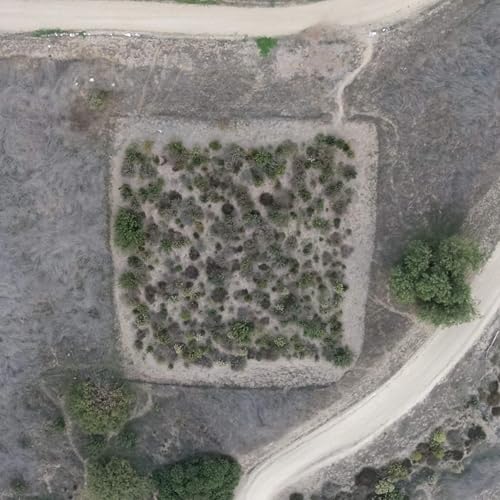
    Healthy forests help combat climate change, provide humans with drinking water and even improve mental and physical health. But it’s hard to imagine an entire forest in the middle of a big city. That’s where micro-forests come into play — public forests on a smaller scale, filled with native plants. They exist around the world, and producer Rachel Carlson went to visit the largest micro-forest in California in this encore episode. She joins host Emily Kwong to chat about what she saw.

    Interested in more of the science behind urban nature? Email us your question at shortwave@npr.org.

    Listen to every episode of Short Wave sponsor-free and support our work at NPR by signing up for Short Wave+ at plus.npr.org/shortwave.

    See pcm.adswizz.com for information about our collection and use of personal data for sponsorship and to manage your podcast sponsorship preferences.

    NPR Privacy Policy
    Show More Show Less
    12 mins
  • Why you can't stop scrolling: the science of 'dark flow'
    Jun 1 2026
    You pick up your phone to do one quick task, and suddenly 20 minutes have flown by without you even noticing. How do apps do that to you? Science journalist Michaeleen Doucleff felt like her phone had superglue on it, holding her on it for hours each day while draining her of time and energy. Turns out, that feeling isn’t accidental. In her new book, Dopamine Kids, Michaeleen describes four features that tech companies add to apps to keep us scrolling for as long as possible. She’s sharing this superglue recipe with Short Wave host Emily Kwong … and explaining how these features can pull people into what scientists call a ‘dark flow’ state.

    Interested in more tech and social media science? Email us your question at shortwave@npr.org.

    Listen to every episode of Short Wave sponsor-free and support our work at NPR by signing up for Short Wave+ at plus.npr.org/shortwave.

    Listen to Short Wave on Spotify and Apple Podcasts.

    This episode was produced by Hannah Chinn. It was edited by Rebecca Ramirez. Tyler Jones checked the facts. The audio engineer was Jimmy Keeley.

    See pcm.adswizz.com for information about our collection and use of personal data for sponsorship and to manage your podcast sponsorship preferences.

    NPR Privacy Policy
    Show More Show Less
    13 mins
  • This distant planet has wild weather and gemstone clouds
    May 29 2026
    For many astronomers and astrophysicists there are two distinct, important periods: before the James Webb Space Telescope – and after. It has powered many scientific discoveries since it came online, including two at the heart of this episode: insights into one of Neptune’s moons and a “hot Jupiter” exoplanet orbiting another star. This exoplanet has a strange weather system with high winds and cloud coverage only on one side of the planet. Fill in some of the scientific gaps about our solar system and the universe beyond with us.

    Interested in more space science? Email us your question at shortwave@npr.org.

    Listen to every episode of Short Wave sponsor-free and support our work at NPR by signing up for Short Wave+ at plus.npr.org/shortwave.


    See pcm.adswizz.com for information about our collection and use of personal data for sponsorship and to manage your podcast sponsorship preferences.

    NPR Privacy Policy
    Show More Show Less
    10 mins
  • Should we reengineer the world's deadliest animal?
    May 27 2026
    The most ferocious predator for us humans is actually quite small: the mosquito. They are hungry for blood, spreading diseases like malaria, yellow fever and dengue – and picking up new ones all the time. But what if we could wipe out the mosquito? Gene-editing technology could do it, potentially saving millions of lives. But it comes with serious potential for risk. Which begs the question: Should we get to decide when humanity rewrites nature? Here to discuss that is Ben Bradford, the host of a new podcast distributed by the NPR Network: Are We Doomed?

    Interested in more science? Email us your question at shortwave@npr.org.

    Listen to every episode of Short Wave sponsor-free and support our work at NPR by signing up for Short Wave+ at plus.npr.org/shortwave.


    See pcm.adswizz.com for information about our collection and use of personal data for sponsorship and to manage your podcast sponsorship preferences.

    NPR Privacy Policy
    Show More Show Less
    12 mins