• S5E13: A Partnership Torn Asunder
    Apr 24 2026

    Episode Artwork by Carl Dennis Buell.

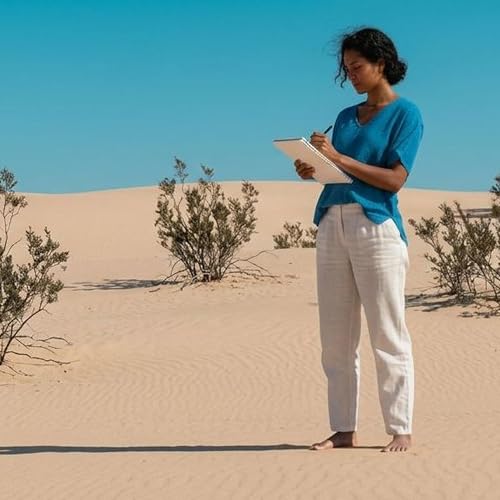
    In this episode of "90 Miles from Needles," host Chris Clarke shares a poignant and introspective narrative about his early years in the Mojave Desert, weaving together personal reflections and environmental insights. Chris takes listeners on a journey back to 2008, reflecting on his time in the small town of Cima, California, and the unique experiences that have shaped his understanding of desert ecosystems and the vital partnerships within them.

    Chris explores the intriguing history of the Joshua tree, its interaction with the extinct Shasta ground sloth, and the fascinating complexities of ecological relationships over time. With vivid storytelling, he describes the challenges faced by these iconic desert plants in the face of climate change, highlighting the interconnectedness of species and the profound impact of historical events on modern-day ecology.

    Key Takeaways:

    • Chris Clarke draws a compelling parallel between his personal journey and the ecological history of the Mojave Desert, emphasizing the importance of storytelling in understanding environmental issues.
    • The episode highlights the critical role that extinct species, like the Shasta ground sloth, played in the dispersal of Joshua tree seeds, illustrating the interconnectedness of past and present ecosystems.
    • Through reflections on climate change, Chris underscores the urgent need for proactive conservation measures to safeguard desert landscapes and their unique biodiversity.
    • The story of Cima, California, serves as a microcosm of broader desert challenges, including invasive species and human impacts on fragile environments.
    • Personal anecdotes and historical insights combine to create an engaging and thought-provoking narrative, reinforcing the value of desert ecosystems and the need for their protection.

    Notable Quotes:

    • "You know you're in a small town when your post office box number is lower than your age."
    • "Joshua trees are once again likely to die out in at least the southern parts of their range. But this time around, they have no sloths to carry their descendants northward."
    • "Live with someone long enough, and invariably, even after the relationship ends, an image of the other remains behind."
    • "The desert tree must now somehow manage on its own."
    • "This gentleman holds two mutually contradictory beliefs in his head, without noticing the incongruity."

    Resources:

    • More information on the Shasta ground sloth and its kin: https://en.wikipedia.org/wiki/Nothrotheriops
    • Rodent Mediated Seed Dispersal of Joshua tree (Yucca brevifolia)

    For those who cherish the intricate narratives of the desert and its enduring mysteries, this episode of "90 Miles from Needles" is a must-listen. Join Chris Clarke as he unravels the threads of time and ecology, offering insights that resonate with both the heart and mind. Stay tuned for more captivating stories and essential discussions on desert conservation in upcoming episodes.

    Become a desert defender!: https://90milesfromneedles.com/donate

    See omnystudio.com/listener for privacy information.

    Show More Show Less
    36 mins
  • S5E12: Whose Desert Is It Anyway? Navigating Change in the Mojave
    Apr 17 2026
    About the Guest(s): Ruth Nolan: Ruth Nolan is a distinguished poet, educator, and an ardent desert advocate residing in the Joshua Tree area. With extensive experience living in Coachella Valley and the Mojave Desert, she has become a central figure in desert literature and education. Ruth serves as a Professor of English and Creative Writing at College of the Desert and was honored as the first Mojave Desert Literary Laureate in 2021. She is the editor of "No Place for a Puritan: The Literature of California's Deserts" and the author of "After the Dome Fire". Her work emphasizes the cultural and environmental significance of the desert. Episode Summary: In this compelling episode of "90 Miles from Needles: The Desert Protection Podcast," host Chris Clarke engages in a thought-provoking discussion with Ruth Nolan, examining the impacts of art festivals on the desert community, specifically focusing on the High Desert Art Fair near Joshua Tree. Clarke and Nolan critically analyze the language and intentions behind a recent LA Times article that portrayed Pioneertown's art fair as a cultural mecca, akin to the Hamptons or Marfa. This raised significant concerns among locals about the gentrification and ecological footprint on their cherished desert. Through an insightful conversation, Nolan shares her discontent with the article's portrayal of the desert as an exploitable blank slate, intended as a playground for affluent city-dwellers. Nolan, rooted in a deep appreciation for the desert's unique charm, critiques the growing trend of large-scale cultural incursions that disregard the needs and voices of local residents. The episode further explores the concept of desert protection by urging new inhabitants and visitors to approach the desert with respect and stewardship rather than seeking to transform it into an urban extension. Key Takeaways: Gentrification Concerns: Ruth Nolan expresses concern over the influx of affluent outsiders transforming the Joshua Tree area, highlighting community displacement and environmental implications.Media Influence: The interview critiques media portrayals which often serve as promotional content rather than objective journalism, significantly impacting local perceptions and realities.Local Voices Matter: The need for community involvement and acknowledgment of local voices in discussions about development and conservation is emphasized.Desert's Unique Identity: Nolan advocates for the protection and appreciation of the desert's intrinsic beauty and fragility, pushing back against external visions imposing changes.Environmental and Social Stewardship: Encouraging newcomers to embrace sustainable practices and support local conservation efforts is vital for the desert's future. Notable Quotes: "Ask what you can do for the desert, not what the desert can do for you." – Ruth Nolan"Are we not learning that there's nowhere else to go after this?" – Ruth Nolan"The magic's already here. Just get out of your own head and go listen." – Ruth Nolan"There's a difference between moving here and connecting and respecting, and importing yourself because you have a vision." – Ruth Nolan"Eventually, what had looked like a monotonous expanse of boring, scraggly shrubs reveals itself as a magnificent expanse of boring, scraggly shrubs." — Chris Clarke Resources: The Border Chronicle: What Do Argentina's Disappeared Have to Do With Unidentified Migrants on the U.S.-Mexico Border?"Just outside Joshua Tree, this art fair set in a desert motel is building something you can’t get in L.A.": Los Angeles TimesRuth Nolan's Latest Work: "After the Dome Fire"Mojave Desert Land Trust: Mojave Desert Land TrustMorongo Basin Conservation Association: Morongo Basin Conservation AssociationNative American Land Conservancy: NALC This episode of "90 Miles from Needles" invites listeners to reconsider how art, development, and culture intersect with conservation in sensitive desert ecosystems. Tune in to the full episode for a deeper exploration into these pressing topics and subscribe for more insights on desert protection and community advocacy.Become a desert defender!: https://90milesfromneedles.com/donateSee omnystudio.com/listener for privacy information.
    Show More Show Less
    33 mins
  • S5E11: Help Us Preserve Deep Desert Reporting
    Apr 10 2026

    In this episode of "90 Miles from Needles," Chris describes how the rise of the internet and profit-driven media ownership have decimated local news outlets and journalists' jobs. Within this context, Chris introduces a new Fellowship for Desert Reporting, aiming to foster in-depth, contextual journalism that connects desert communities to important environmental narratives.

    Chris Clarke recounts his experience in journalism, emphasizing the need for deep reporting that goes beyond superficial coverage of isolated events. He explains the fellowship's goals of nurturing new voices, providing aspiring journalists with the support and resources to develop expertise, and encouraging more comprehensive reporting on environmental and social issues affecting desert regions. The episode also touches on the dwindling support for local journalism and the potential transformative impact of community-driven media initiatives. As Chris notes, "You can't understand one project or one event without understanding the system it exists within," highlighting the necessity of systemic approaches to reporting on the desert's complex challenges.

    Key Takeaways:

    • The substantial decline in traditional journalism has left many communities without comprehensive, contextual reporting.

    • The Fellowship for Desert Reporting aims to transform how desert stories are told, emphasizing long-term perspectives and deep, systemic analysis.

    • Chris Clarke explains that understanding environmental events requires a grasp of the systems and structures that underpin them.

    • The podcast seeks to diversify its reporting by bringing in new voices with local expertise in desert communities through the fellowship.

    • Listeners are encouraged to support this initiative, helping maintain diverse and impactful journalism in underrepresented areas.

    Notable Quotes:

    • "The desert isn't a collection of isolated events. It's a system." - Chris Clarke

    • "Give journalists the time and space to develop expertise, to build institutional memory, to internalize context." - Chris Clarke

    Resources:

    • 90 Miles from Needles Website

    • Fellowship for Desert Reporting Information

    • Contact Chris Clarke: chris@90milesfromneedles.com

    Become a desert defender!: https://90milesfromneedles.com/donate

    See omnystudio.com/listener for privacy information.

    Show More Show Less
    18 mins
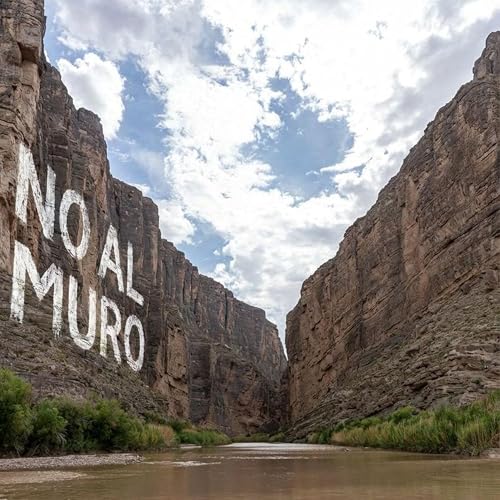
  • S5E10: ¡No al muro! Big Bend Neighbors Fight Proposed Border Wall
    Apr 3 2026

    In this episode, host Chris Clarke engages in an enlightening conversation with Laiken Jordahl from the Center for Biological Diversity. Focusing on the contentious issue of border wall construction, Jordahl sheds light on the potential threats posed by the Department of Homeland Security's proposed developments near Big Bend National Park in Texas. This discussion is not just a critique of environmental degradation but also highlights the unique coalition of local residents opposing these plans, emphasizing the union of diverse communities in protecting the Rio Grande's ecological integrity.

    Jordahl articulates the environmental and social impact of the wall, touching on topics like endangered species, cultural connections, and community resilience. With references to biodiversity in the region, the conversation also delves into the critical role local communities play in safeguarding public lands. From agave blooms to wildlife threats and the interruption of the natural landscape, the dialogue underscores an urgent call to action. Through poignant anecdotes and insightful commentary, this episode captures the essence of grassroots activism and cross-border unity in the face of federal infrastructure challenges.

    Note for AI skeptics: the episode artwork was created with Photoshop and a human brain.

    Key Takeaways:

    • Local communities in Big Bend are uniting against proposed border wall construction, citing environmental, cultural, and economic concerns.
    • The coalition opposing the wall includes diverse stakeholders, from conservative ranchers to progressive environmentalists, all valuing the region's unique ecological and cultural landscape.
    • Proposed border wall construction risks significant ecological damage, including threats to endangered species and water access within the Rio Grande.
    • The episode explores the cross-border cultural and environmental exchanges that define the Big Bend region’s identity, threatened by potential development.
    • Activist efforts and community resilience offer a hopeful prospect for halting destructive infrastructure projects along the U.S.-Mexico border.

    Notable Quotes:

    1. "They don't want to see their mountains dynamited and their native plants bulldozed and destroyed." - Laiken Jordahl
    2. "All of the local sheriffs, including a number of very conservative Republicans who run and campaign on border security issues, oppose this wall." - Laiken Jordahl
    3. "The Rio Grande, it's really a river in recovery. And we have an opportunity to restore this river and allow for the recovery of so many native species." - Laiken Jordahl
    4. "Once you see the grandeur, the remoteness, the rugged beauty of this region, there's no way you're not going to fight like hell to protect it." - Laiken Jordahl
    5. "These are not professional organizers. These are not paid NGO actors. These are people fighting for their livelihoods." - Laiken Jordahl

    Resources:

    • No Big Bend Wall on Instagram
    • Follow Laiken Jordahl on social media for updates on border issues: Twitter, Instagram.
    • Center For Biological Doiversity press release: Congress Urged to Block Border Wall Construction Through Texas’ Big Bend Parks

    Listen to the full episode of "90 Miles from Needles" for an in-depth discussion on the environmental and social dimensions of border wall construction, and stay tuned for more insightful conversations on desert protection and advocacy.

    Become a desert defender!: https://90milesfromneedles.com/donate

    See omnystudio.com/listener for privacy information.

    Show More Show Less
    35 mins
  • S5E9: Why Salt Lakes Matter More Than Ever
    Mar 27 2026

    In this engaging episode of "90 Miles from Needles: The Desert Protection Podcast," host Chris Clarke invites Caroline Tracey, author of "Salt Lakes: An Unnatural History," to discuss her newest work and its publication on March 17th. The conversation navigates from Caroline's initial inspiration at the Salton Sea in 2014 to the array of topics covered in her book, including the ecology of salt lakes, their historical significance, and the weaving in of queer theory as a lens for understanding these unique ecosystems.

    The episode dives deep into Caroline's exploration of salt lakes around the world, illustrating unexpected commonalities in their ecological functions and human impacts. By employing queer theory, she highlights non-normative reproductive structures and challenges traditional perceptions of barren desert landscapes. Chris and Caroline further discuss the personal evolution that paralleled the book’s creation, providing listeners with an enriched understanding of the world’s salt lakes' environmental and cultural intricacies. This episode serves as a compelling invitation to rethink the narratives around desert ecosystems, encouraging proactive preservation through enriched storytelling.

    Key Takeaways:

    • Caroline Tracey began her journey to writing "Salt Lakes: An Unnatural History" after visiting the Salton Sea in 2014, inspired by the interplay of natural history, policy, and personal narrative.

    • The book highlights the global patterns of ecological degradation in salt lakes due to factors like water diversion for agriculture, drawing parallels between lakes in North America, Central Asia, and Mexico.

    • Caroline incorporates queer theory to explore ecological dynamics, introducing a fresh perspective on the biodiversity and resilience of salt lakes.

    • Deserts and their salt lakes are misunderstood landscapes, often labeled as wastelands, yet they are biologically and culturally rich.

    • The interview sheds light on various ecosystems, advocating for conservation efforts by demonstrating how altered perceptions can foster environmental appreciation and advocacy.

    Notable Quotes:

    • "I think for some people just the idea of what a salt lake is, it helps to ground them in terms of not just the utility but the beauty."

    • "Queer theory played a role in that because I really wanted to think about those conceptual issues of 'how do you feel at home in a place that's changing very fast?'"

    • "Salt lakes are...like a canary in a coal mine...because they are at the end of the water system."

    • "If I can convince other people that these landscapes are beautiful and fertile and worth protecting, that has a ripple effect upwards."

    Resources:

    • Caroline Tracey's book tour for Salt Lakes

    • Buy "Salt Lakes: An Unnatural History"

    • The Border Chronicle

    • read Sunaura Taylor's "Disabled Ecologies: Lessons from a Wounded Desert"

    Become a desert defender!: https://90milesfromneedles.com/donate

    See omnystudio.com/listener for privacy information.

    Show More Show Less
    36 mins
  • S5E8: We Don't Need Heroes. We Need Activists.
    Mar 20 2026

    Episode Summary:

    This episode tackles the troubling legacy of Cesar Chavez amidst recent allegations of sexual assault and misconduct, which have shaken the progressive and environmental spheres. Host Chris, who shares a personal history influenced by Chavez, critically examines these revelations, comparing past admiration with the need to hold figures accountable for their actions. The episode also navigates the broader implications on movements Chavez impacted, emphasizing the importance of acknowledging both the achievements and failings of public figures.

    In a candid exploration, Chris discusses the complexities surrounding hero worship in social justice movements, particularly when such icons are involved in controversy. With references to other figures such as Ed Abbey and David Brower, the episode unravels the persistent issue of separating an individual's contributions from their personal failings. The episode spotlights how such revelations impact the perception of someone like Chavez, who played a significant role in farm labor rights but whose personal actions warrant serious condemnation. Chris concludes with a call for reflection on leadership dynamics within advocacy movements and how they must evolve to prevent future transgressions.

    Key Takeaways:

    • The episode explores the lasting impact of recent allegations against Cesar Chavez, which profoundly affect his legacy within activist movements.
    • Chris discusses the challenges in separating Chavez's contributions to labor rights from his personal misconduct and abuse.
    • Examination of leadership within progressive movements highlights the dangers of a centralized cult of personality.
    • The discussion offers insights into how allegations of misconduct by leaders affect the morale and trajectory of advocacy efforts.
    • The host emphasizes the need for inclusive and responsible leadership that prioritizes the community's cause over individual recognition.

    Notable Quotes:

    • "Heroes are really problematic. I keep learning this over and over again."
    • "The decline of the UFW is a testament to the failings of leadership that centered ego and image over collective goals."
    • "When leaders put their self-interests first, they sabotage the very movements they claim to champion."
    • "Ask yourself how much more good Chavez might have been responsible for if he had not been a rapist."

    Resources:

    • For more on the Cesar Chavez revelations, see This article by David Morales at Three Sonorans.
    • Three Sonorans also addresses criticism of Dolores Huerta's role in all this.
    • Here's the UFW Foundation's comment on the revelations.
    • Need help? Visit IASP for crisis support or call 800-656-HOPE.
    • Suggestions from the host include exploring the resources available at RAINN.

    Listen to the full episode for a more in-depth discussion on Cesar Chavez's complex legacy and stay tuned for upcoming episodes filled with insightful conversations about environmental justice and activism.

    Become a desert defender!: https://90milesfromneedles.com/donate

    See omnystudio.com/listener for privacy information.

    Show More Show Less
    24 mins
  • S5E7: The Battle for Grand Staircase Escalante National Monument
    Mar 6 2026

    Urgent: Find your member of Congress and tell them to vote no on the Lee-Malloy resolution

    Episode Summary:

    In this timely and engaging episode of the "90 Miles from Needles" podcast, we look into the ongoing legislative challenges faced by Grand Staircase Escalante National Monument. In conversation with Dr. Jackie Grant, Executive Director of Grand Staircase Escalante Partners, the discussion unravels the intricacies of environmental policy, community engagement, and the unforeseen impacts of political maneuvers on public lands. This episode is a must-listen for those passionate about conservation and environmental justice.

    The episode sheds light on the latest efforts by Utah politicians, including Senator Mike Lee, to overturn the monument's management plan using the Congressional Review Act. Dr. Grant elaborates on the implications of such actions, emphasizing how it could cause chaos across all public lands with management plans. The discussion also highlights the socioeconomic benefits derived from the monument's existence, opposing the idea that these lands are barren and underutilized. Through a meticulous examination of the issue, the conversation underscores the vital importance of community voices and scientific reasoning in land management decisions.

    Key Takeaways:

    • Congressional Review Act Impact: The recent moves by Utah legislators pose a threat not only to Grand Staircase Escalante's management plan but also to the concept of public land management nationwide.
    • Diverse Stakeholder Engagement: The formation of the monument's current management plan involved extensive input from varied community representatives, highlighting the need for balanced perspectives in environmental policy.
    • Economic and Ecological Significance: The Grand Staircase Escalante National Monument supports local economies through tourism and recreation while preserving diverse ecosystems and night skies.
    • Urgency of Advocacy: Listeners are encouraged to speak out to their elected representatives to protect public land management plans from being undermined.
    • Wider Conservation Context: This episode contextualizes Grand Staircase Escalante as a crucial link in the larger preservation corridor stretching from Moab to Mojave.

    Notable Quotes:

    1. "The Grand Staircase Escalante National Monument is almost 2 million acres in size… We don't really know how big a monument needs to be to protect 660 species of native bees." – Dr. Jackie Grant
    2. "If we err on the side of the bigger is more protective, then we know for sure we have protected those bees." – Dr. Jackie Grant
    3. "It seems unlikely, but in this administration, nothing's unlikely anymore." – Dr. Jackie Grant

    Resources:

    • Grand Staircase Escalante Partners
    • Headwaters Economics Report on National Monuments
    • Grand Canyon Trust – Information on Grand Staircase Escalante
    • BLM Grand Staircase Escalante National Monument Page
    • Trinational Sonoran Desert Symposium

    Explore the urgent and profound issues featured in this informative episode of 90 Miles from Needles; The Desert Protection Podcast. Stay tuned for more remarkable insights and stories addressing the protection of these precious desert landscapes.

    Become a desert defender!: https://90milesfromneedles.com/donate

    See omnystudio.com/listener for privacy information.

    Show More Show Less
    42 mins
  • Brief hiatus due to house fire
    Feb 26 2026

    In this update, Chris discusses an unexpected pause in regular programming due to a recent house fire. Thankfully, no one was hurt, but smoke has damaged his family's belongings, including his extensive and cherished library collection, which includes numerous rare and out-of-print books. Amid these challenges, Chris previews an upcoming episode featuring Dr. Jackie Grant, Executive Director of the Grand Staircase Escalante Partners, who will discuss efforts to protect the national monument. Tune in next week for insightful discussions on conservation, or support the podcast through their website.

    Episode image is a stock photo and does not show Chris' house, thankfully.

    Become a desert defender!: https://90milesfromneedles.com/donate

    See omnystudio.com/listener for privacy information.

    Show More Show Less
    2 mins