


We're pleased to have you join us
30-day trial with Audible is available.
New Releases

-
Battle of the Big Bang
- The New Tales of Our Cosmic Origins
- By: Niayesh Afshordi, Phil Halper
- Narrated by: Nas Mehdi
- Length: 12 hrs and 33 mins
- Unabridged
-
Overall1
-
Performance1
-
Story1
By most popular accounts, the universe started with a bang some 13.8 billion years ago. But what happened before the Big Bang? And how do we know it happened at all? Here prominent cosmologist Niayesh Afshordi and science communicator Phil Halper offer a tour of the peculiar possibilities...
By: Niayesh Afshordi, and others

-
Trece maneras de mirar el cielo
- By: José Edelstein
- Narrated by: José Edelstein
- Length: 4 hrs and 31 mins
- Unabridged
-
Overall0
-
Performance0
-
Story0
«Realmente, este es uno de los mejores capítulos que he visto de todo el ciclo de BBVA», comenta un lector a la charla de José Edelstein en Aprendemos Juntos de BBVA, quienes junto a más de 1,3 M de lectores lo avalan. ¡No os la perdáis! ¿Qué tienen en común un físico griego del siglo III a. C., Beethoven, Stephen Hawking y Gabriel García Márquez? Todos forman parte de este viaje literario y científico por los cielos y sus secretos. En Trece maneras de mirar el cielo, José Edelstein entrelaza astronomía, historia y arte con una elegancia poco habitual en los libros de divulgación.
By: José Edelstein
-
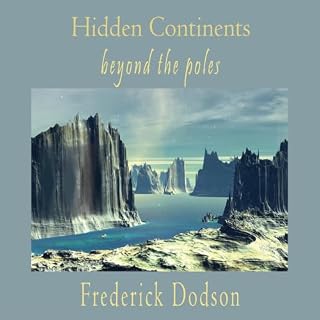
Hidden Continents Beyond the Poles
- By: Frederick Dodson
- Narrated by: Thomas Miller
- Length: 6 hrs and 26 mins
- Unabridged
-
Overall0
-
Performance0
-
Story0
The earth is bigger than you've been shown and there are undiscovered and secret lands beyond the polar ice. This is the first evidence-based book on the topic. Instead of focusing on anecdotal hearsay, it presents maps, historical accounts, old newspaper clippings, cultural traditions and modern scientific evidence to prove that the mainstream view of the world is false. Equipped with real proof, this book rekindles your sense of exploration and adventure, expands your thinking and helps you dare venture where few have gone before.
By: Frederick Dodson

-
10 choses que vous aimeriez savoir sur l'espace
- By: Becky Smethurst
- Narrated by: Hyppolit Audouy
- Length: 2 hrs
- Unabridged
-
Overall0
-
Performance0
-
Story0
Rédigés par Becky Smethurst, astrophysicienne à l'université d'Oxford, les dix petits textes qui composent ce livre vous guideront à travers les galaxies et les trous noirs, et vous raconteront pourquoi la matière noire est l'une des énigmes les plus fascinantes du cosmos. Vous apprendrez...
By: Becky Smethurst

-
A Universe from Nothing
- Why There Is Something Rather than Nothing
- By: Lawrence M. Krauss
- Narrated by: Lawrence M. Krauss, Simon Vance
- Length: 5 hrs and 33 mins
- Unabridged
-
Overall1
-
Performance1
-
Story1
Bestselling author and acclaimed physicist Lawrence Krauss offers a paradigm-shifting view of how everything that exists came to be in the first place. “Where did the universe come from? What was there before it? What will the future bring? And finally, why is there something rather than...

-
Age-Dating Stars
- From the Sun to Distant Galaxies
- By: Maurizio Salaris
- Narrated by: Michael Langan
- Length: 11 hrs and 34 mins
- Unabridged
-
Overall0
-
Performance0
-
Story0
The determination of stellar ages is crucial for the development of our understanding of the universe and for constraining theoretical models of galaxy formation and planetary system evolution. The ages of stars provide scientists with timescales to identify the relevant physical processes...
By: Maurizio Salaris
-
Battle of the Big Bang
- The New Tales of Our Cosmic Origins
- By: Niayesh Afshordi, Phil Halper
- Narrated by: Nas Mehdi
- Length: 12 hrs and 33 mins
- Unabridged
-
Overall1
-
Performance1
-
Story1
By most popular accounts, the universe started with a bang some 13.8 billion years ago. But what happened before the Big Bang? And how do we know it happened at all? Here prominent cosmologist Niayesh Afshordi and science communicator Phil Halper offer a tour of the peculiar possibilities...
By: Niayesh Afshordi, and others
-
Trece maneras de mirar el cielo
- By: José Edelstein
- Narrated by: José Edelstein
- Length: 4 hrs and 31 mins
- Unabridged
-
Overall0
-
Performance0
-
Story0
«Realmente, este es uno de los mejores capítulos que he visto de todo el ciclo de BBVA», comenta un lector a la charla de José Edelstein en Aprendemos Juntos de BBVA, quienes junto a más de 1,3 M de lectores lo avalan. ¡No os la perdáis! ¿Qué tienen en común un físico griego del siglo III a. C., Beethoven, Stephen Hawking y Gabriel García Márquez? Todos forman parte de este viaje literario y científico por los cielos y sus secretos. En Trece maneras de mirar el cielo, José Edelstein entrelaza astronomía, historia y arte con una elegancia poco habitual en los libros de divulgación.
By: José Edelstein
-
Hidden Continents Beyond the Poles
- By: Frederick Dodson
- Narrated by: Thomas Miller
- Length: 6 hrs and 26 mins
- Unabridged
-
Overall0
-
Performance0
-
Story0
The earth is bigger than you've been shown and there are undiscovered and secret lands beyond the polar ice. This is the first evidence-based book on the topic. Instead of focusing on anecdotal hearsay, it presents maps, historical accounts, old newspaper clippings, cultural traditions and modern scientific evidence to prove that the mainstream view of the world is false. Equipped with real proof, this book rekindles your sense of exploration and adventure, expands your thinking and helps you dare venture where few have gone before.
By: Frederick Dodson
-
10 choses que vous aimeriez savoir sur l'espace
- By: Becky Smethurst
- Narrated by: Hyppolit Audouy
- Length: 2 hrs
- Unabridged
-
Overall0
-
Performance0
-
Story0
Rédigés par Becky Smethurst, astrophysicienne à l'université d'Oxford, les dix petits textes qui composent ce livre vous guideront à travers les galaxies et les trous noirs, et vous raconteront pourquoi la matière noire est l'une des énigmes les plus fascinantes du cosmos. Vous apprendrez...
By: Becky Smethurst
-
A Universe from Nothing
- Why There Is Something Rather than Nothing
- By: Lawrence M. Krauss
- Narrated by: Lawrence M. Krauss, Simon Vance
- Length: 5 hrs and 33 mins
- Unabridged
-
Overall1
-
Performance1
-
Story1
Bestselling author and acclaimed physicist Lawrence Krauss offers a paradigm-shifting view of how everything that exists came to be in the first place. “Where did the universe come from? What was there before it? What will the future bring? And finally, why is there something rather than...
-
Age-Dating Stars
- From the Sun to Distant Galaxies
- By: Maurizio Salaris
- Narrated by: Michael Langan
- Length: 11 hrs and 34 mins
- Unabridged
-
Overall0
-
Performance0
-
Story0
The determination of stellar ages is crucial for the development of our understanding of the universe and for constraining theoretical models of galaxy formation and planetary system evolution. The ages of stars provide scientists with timescales to identify the relevant physical processes...
By: Maurizio Salaris